The 2026 World Cup Will Be The Most Expensive In History
Money and Business Economy News – Follow-up Bloomberg News reported that the costs of the 2026 FIFA World Cup will be the highest in history for fans attending the tournament in the United States, Canada, and Mexico.
The agency explained that ticket prices for the tournament matches have witnessed an unprecedented rise, with some categories reaching hundreds of thousands of dollars, coinciding with a significant increase in transportation, parking and match-related service costs.
She noted that this prompted a number of fans to announce their boycott of attending the tournament and to be content with following it remotely.
With the 2026 World Cup kicking off next week in Canada, Mexico and the United States, the controversy surrounding the tournament, already ranked as the most expensive in football history, is growing.
As fans prepare to follow the world’s biggest event, ticket prices and tournament-related expenses have become a major topic of discussion, with some fearing the impact of strict US immigration policies on the event’s atmosphere.
Conversely, host cities face increasing financial pressure to avoid incurring significant losses, as they seek to offset the expenses associated with hosting the matches by passing some of the costs on to consumers and taxpayers.
In New York State, which is hosting the final at MetLife Stadium, the New Jersey Transit Authority has introduced special tickets to get to the stadium for $98 per trip, compared to about $13 under normal circumstances.
This is just one example of the price increases associated with the tournament, which is expected to generate up to $13 billion in revenue for FIFA.
The 2026 edition saw the implementation of the “dynamic pricing” system for the first time in the history of the World Cup, a system that links ticket prices to market demand levels.
FIFA said that demand for tickets reached record levels during this edition, with more than half a billion purchase requests submitted during the first phase of sales.
With increased demand, prices automatically rise according to the new pricing mechanism, making the 2026 World Cup tickets the most expensive in the tournament’s history.
Since the announcement that the tournament would be hosted, security and transportation costs have emerged as one of the biggest challenges facing the host cities.
The US government had approved grants of $625 million for the eleven US cities hosting the games, but these funds were not disbursed until last March, and many officials believe that they may not be enough to cover the actual expenses.
The problem is further complicated by the fact that the cities do not receive any share of the match revenues, as the proceeds go directly to FIFA, which in turn asserts that it reinvests these funds in the development of football around the world.
Therefore, host cities rely primarily on tourist spending and indirect economic returns to offset their investments, a bet that often does not pay off, according to mathematical economists.
Bloomberg News quoted Andrew Zimbalist, an economics professor at Smith College and author of several studies on the economics of sports, as saying that government grants are an important support but are not enough to meet potential security challenges.
He added: “This is a good amount, but it doesn’t even come close to covering potential security problems. When costs are high on one hand, while direct revenues for cities are almost non-existent on the other, the result is a net loss of this magnitude.”
He explained that part of these expenses may be covered through local sponsorship contracts or private donations, but the remaining part will likely be borne by taxpayers in the end.
As the world prepares to watch the largest edition in World Cup history in terms of the number of teams and matches, increasing questions arise about whether the expected economic gains will actually justify the exorbitant costs borne by fans and host cities, or whether the tournament could turn into an economic “backfire” off the pitch.
Gold Is Declining And Heading For A Weekly Loss
Money and Business Economy News – Follow-up Gold prices edged lower on Friday and are on track for a weekly loss after Middle East tensions dampened hopes for a peace deal between the United States and Iran, amid rising inflation and concerns about higher interest rates.
Gold fell 0.3 percent to $4,462.22 an ounce in spot trading by 0049 GMT. It is down about 1.6 percent so far this week.
U.S. gold futures for August delivery fell 0.4 percent to $4,489, according to Reuters.
Trade: New Measures To Combat Monopolies And Ensure Competitive Pricing Of Goods
Localities Economy News – Baghdad The Ministry of Commerce announced on Friday new measures to combat monopolies and provide goods at competitive prices.
The Ministry of Trade spokesman, Mohammed Hanoun, said that “the ministry is witnessing remarkable progress compared to previous years, through the adoption of reform and administrative programs aimed at enhancing performance efficiency and improving the level of services provided to citizens,” noting that “the ministry is currently working on developing mechanisms for market control and monitoring price movements in coordination with the relevant regulatory bodies, which contributes to reducing cases of monopoly and price manipulation and protecting the consumer.”
He added that “the ministry is also focusing on updating the work procedures of its various departments and expanding the use of electronic systems, with the aim of simplifying transactions and reducing administrative red tape, as well as enhancing food security procedures through managing the strategic stock of basic materials and ensuring the stability of the supply of ration card items.”
Hannon pointed out that “the ministry, in the context of serving the citizen and achieving social justice, has moved towards adopting the experience of government hypermarkets as a modern model that provides food and consumer goods of appropriate quality and competitive prices, while providing wider options for citizens in various governorates,” explaining that “this experience aims to enhance balance in the local market, support the purchasing power of Iraqi families, and provide an organized shopping environment that contributes to achieving price stability and serving various segments of society.”
The Integrity Commission Deploys Its Field Staff To Monitor Fuel Distribution And Supervise Filling Stations
Energy Economy News – Baghdad The Federal Integrity Commission announced on Friday that it has formed field teams to monitor the fuel supply process at filling stations and supervise distribution mechanisms in order to prevent smuggling and ensure that petroleum products reach citizens, as part of the measures taken to address the gasoline crisis and monitor the smooth flow of supply.
A statement issued by the commission and received by “Al-Eqtisad News” stated that “teams composed of staff from the Prevention and Investigations Departments began, on Friday afternoon, to carry out surprise field visits to a number of fuel filling stations on both sides of Baghdad, Karkh and Rusafa.”
He added that “the visits are to review the procedures for preparing the gasoline product, and to match the quantities of fuel supplied from the warehouses of the Oil Products Distribution Company with the quantities dispensed to citizens, as well as to follow up on the storage and distribution mechanisms and to verify that no cases of smuggling or manipulation have occurred.”
He pointed out that “the field teams observed that the preparation operations, especially after the issuance of the Prime Minister’s directives, are continuing at the stations that were visited, especially the Al-Saydiya station, where there was a greater demand for improved gasoline compared to regular gasoline, with the stations continuing to be supplied with the product via tankers and at regular rates, while a relative congestion was observed at the outlets for supplying improved gasoline, with the smooth flow of work and supplying citizens with fuel.” https://www.economy-news.net/content.php?id=69880
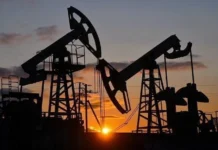
Iraqi Oil Exports Via The Kurdistan Region Pipeline Are Expected To Stabilize In May.
Energy Economy News – Baghdad Economic expert Nabil Al-Marsoumi predicted on Friday that Iraq’s total oil exports during May would remain at the same levels as April, at around 329,000 barrels per day as an additional export rate through the northern outlets and some alternative distribution channels, amid continued unrest in the region and disruption of supply chains through the Strait of Hormuz.
Al-Marsoumi explained in a post that the average export through the Kurdistan Region pipeline to the Turkish port of Ceyhan reached 233,000 barrels per day in May, of which about 20,000 barrels came from the region’s fields, and the rest from Kirkuk oil and the northern and central fields.
These estimates come in conjunction with official warnings issued by Oil Minister Bassem Mohammed Khudair, in which he revealed the extent of the damage inflicted on the country’s export capacity as a result of the current tensions in the region, noting that total exports have declined from their normal rate of 93 million barrels per month before the crisis, to be limited to very low levels of only about 10 million barrels in April due to the disruption of maritime navigation.