The Central Bank Calls On Banks To Facilitate Foreign Transfers And Exempts Them From The Deposit Period Requirement
Baghdad (INA) – The Central Bank of Iraq called on licensed banks on Sunday to facilitate foreign transfers and exempt them from the RTGS deposit period requirement.
A statement from the bank, received by the Iraqi News Agency (INA), said, “The Central Bank of Iraq has called on all licensed banks to facilitate foreign transfer procedures for customers with completed transactions.”
The statement added that “the bank will replenish the banks’ accounts abroad as needed and exempt them from the RTGS deposit period requirement.” https://ina.iq/ar/economie/276547-.html
The US Treasury Lifts Restrictions On A Number Of Iraqi Exchange Companies
Baghdad – WAA The Central Bank of Iraq announced on Sunday that the US Treasury Department has lifted restrictions on a number of Iraqi exchange companies.
The bank said in a statement received by the Iraqi News Agency (INA) that “the US Treasury Department has lifted restrictions on a number of Iraqi exchange companies, after verifying that they meet the compliance standards approved by the Central Bank of Iraq, which allows them to return to participating in dollar sales to travelers.”
He added that “this step comes within the framework of strengthening compliance with regulatory controls and regulating foreign currency sales operations in accordance with the approved frameworks.” https://ina.iq/ar/international/276543-.htm
The Dollar Drives Up Prices, And The Ministry Of Commerce Records 200 Violations… 3 Challenges Facing The Iraqi Market
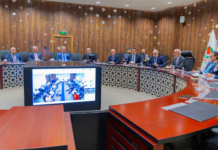
Baghdad International Fair – 964 The Ministry of Trade in Baghdad organized the first edition of the Trade, Economy and Social Responsibility Conference to discuss the reality of local markets, rising prices, support for the private sector and national products, as well as commercial control procedures and the provision of ration card items, amid demands from representatives of the private sector to address the dollar crisis, bureaucracy and declining consumer confidence.
Mohammed Hannoun, advisor to the Ministry of Trade, reviewed for 964 Network the details of the conference’s objectives and the measures taken in the market, saying that the goal of organizing the first edition of the conference is to strengthen the partnership between the public and private sectors, exchange views on economic challenges, promote development, and conclude memoranda of understanding and joint agreements with countries around the world in a way that contributes to increasing the volume of trade exchange.
Mohammed explained that the ministry sought to listen to the opinions of specialists and stakeholders from both sectors and discuss viewpoints on the reality of the Iraqi economy, stressing that the ministry is working in coordination with security and regulatory bodies to monitor prices in local markets and prevent their rise, in cooperation with teams from the Ministry of Interior, including organized crime and national security teams.
He pointed out that the regulatory measures aim to prevent price manipulation and hold violators accountable in accordance with the anti-monopoly law, which allows for prison sentences ranging from one to three years for traders or officials who withhold materials from circulation or significantly raise their prices.
Mohammed explained that the commercial control procedures resulted in monitoring more than 200 procedures or operations to seize and violate in Baghdad and the governorates, noting that the ministry’s provision of food supplies to citizens depends on the items of the ration card allocated in the general budget, where the number of meals provided during the current year ranges between 8 and 9 meals.
He added that there are other measures to support the markets, including strengthening the role of hypermarkets and cooperative markets and offering materials at prices lower than local market prices, with the aim of reducing price increases and mitigating the negative effects resulting from the decision to raise the dollar exchange rate.
For his part, the Director General of the Department of Commercial and Financial Control at the Ministry of Trade, Riyadh Al-Moussawi, confirmed to 964 Network that the Ministry continues to monitor local markets and commodity prices in Baghdad and the governorates in coordination with security agencies and sectoral bodies to hold violators accountable and prevent price manipulation, noting that the distribution of the sixth batch of the food basket is proceeding smoothly in reaching citizens, with continued monitoring of warehouses and distribution agents.
Al-Moussawi confirmed that the ministry’s warehouses contain the quantities required to prepare the next meals within the strategy of securing food supplies and enhancing partnership in preparing the food basket, indicating that the market in Iraq is a competitive market, and the ministry has adopted several measures to support its stability, including the opening of the hypermarket, which witnessed a decrease in the prices of a number of goods compared to local markets, in addition to intensifying monitoring campaigns and holding accountable some speculators and traders who raised prices.
He pointed out that the main reason for the increase in prices is due to the rise in the dollar exchange rate, and that the market has begun to witness a gradual decline, while the ministry continues its efforts to regulate the markets and ensure the smooth distribution of ration card items and food commodities.
At the conclusion of the conference, Hisham Khaled, the managing director of Beit Al Hikma Company, confirmed to 964 Network : “We import in dollars, and the problems of the parallel market raise the cost of goods for the merchant and ultimately reflect negatively on the prices of products paid by the citizen.”
Khaled called for providing real support to the merchant and the private sector, adding: “Frankly, the merchant complains about routine and bureaucratic procedures, in addition to fees and levies that are sometimes imposed without prior study of the market, and Iraq is a developing market and needs support to compete with global or at least regional markets.”
Hisham stressed that the weak ability of the trader to compete, along with the limited ability of local production to compete with imported goods, lead to negative repercussions on the Iraqi market and consumer, indicating that there are three main challenges facing the Iraqi market, namely: the poor quality of local production, the instability of exchange rates, and the absence of real support for the private sector.
Hisham continued: “The problem is not limited to government support, but also includes the Iraqi consumer’s weak confidence in the local product and his preference for foreign products,” stressing that supporting the national industry requires an active government role, in addition to promoting consumer culture and encouraging them to buy local products to raise the quality of production and enhance confidence in the national product. https://964media.com/726211/