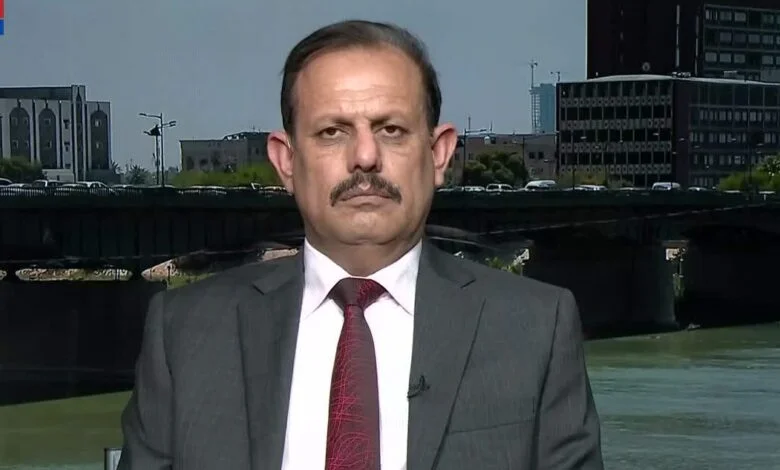
Economic expert and academic Abdul Rahman Al-Mashhadani warned that Iraq is entering a critical financial phase marked by shrinking liquidity, pressure on government banks, declining oil revenues, and falling foreign reserves, while stressing that the country still retains several options to avoid a deeper crisis.
According to Al-Mashhadani, major state banks — including Al-Rafidain Bank, Trade Bank of Iraq, and Al-Rasheed Bank — have collectively lent the Iraqi government more than 50 trillion dinars in recent years to finance budget deficits and public expenditures.
Liquidity pressures inside Iraqi banks
Al-Mashhadani said this heavy reliance on domestic borrowing has severely weakened the liquidity position of government banks, causing growing difficulties for citizens attempting to withdraw deposits.
He noted that state banks hold roughly 85% of Iraqi deposits because the public continues to trust government institutions more than private banks, many of which have suffered bankruptcies or financial instability.
He also criticized the Central Bank of Iraq for what he described as insufficient intervention to strengthen confidence in the private banking sector and protect depositors.
Iraq still has financing options
Despite the pressure, Al-Mashhadani argued that Iraq still possesses several tools to manage the crisis, including:
- Issuing treasury bonds
- Seeking external borrowing
- Expanding international financial cooperation
He explained that the Central Bank is currently relying on indirect financing mechanisms through government bonds rather than direct lending, partly to remain within legal restrictions governing central bank financing of the government.
IMF support could return after government formation
Al-Mashhadani stated that the International Monetary Fund is prepared to support Iraq once a fully empowered government is formed.
According to him, the IMF does not typically finalize agreements with caretaker governments but instead works with administrations capable of implementing binding economic reforms and fiscal commitments.
He recalled that Iraq previously secured more than $20 billion in financing and credit facilities in 2016 after reaching an IMF-backed agreement, which helped unlock additional funding from international lenders and foreign governments.
External debt remains manageable
Al-Mashhadani emphasized that Iraq’s external debt remains relatively low by regional standards, currently estimated at approximately $14 billion.
He contrasted Iraq’s position with countries such as Egypt and Jordan, arguing that Iraq’s dollar-denominated oil revenues provide stronger capacity to service foreign debt obligations.
He suggested that any new borrowing program would likely remain within a range of $20–25 billion, which he believes still falls within “safe zone” thresholds used by the IMF and the World Bank.
Falling reserves raise exchange-rate concerns
One of the most significant warnings in his remarks involved the decline in Iraq’s foreign reserves.
Al-Mashhadani said Central Bank reserves have reportedly fallen from around $98 billion to approximately $83 billion due to continued financing of imports and foreign remittances.
He warned that weaker oil revenues are increasing pressure on:
- Iraq’s foreign currency reserves
- The Iraqi dinar exchange rate
- The government’s ability to sustain imports and public spending
However, he argued that external borrowing in dollars could temporarily ease pressure because the government could sell borrowed dollars to the Central Bank in exchange for dinars, thereby helping stabilize reserves and support trade financing.
Oil prices remain Iraq’s key safety valve
Al-Mashhadani concluded that Iraq’s outlook still depends heavily on oil market performance. He expects crude prices to remain above $85 per barrel through 2026 and into 2027, which he believes could provide enough revenue support to help Iraq navigate its current fiscal and banking pressures.
His comments reinforce growing debate inside Iraq over whether the country should prioritize:
- spending reforms,
- external borrowing,
- exchange-rate adjustments,
- or broader restructuring of the banking and public finance system.