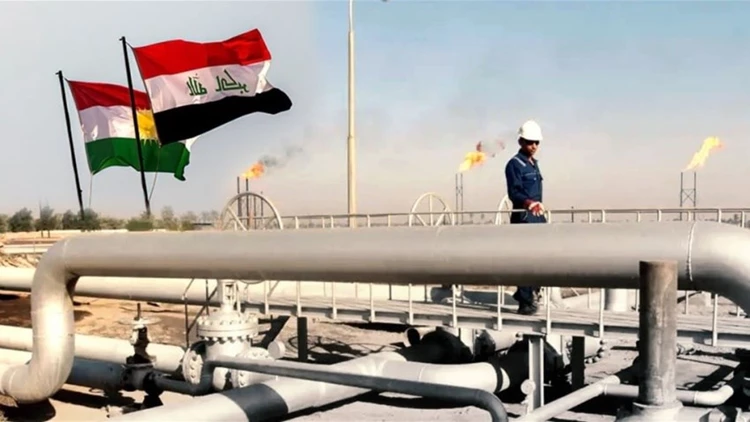
Economic expert Nasser al-Kinani said on Sunday that the Kurdistan Regional Government’s failure to export oil under its agreements with Baghdad is causing major financial losses for Iraq, estimated at around $4 billion. He also said the region has outstanding financial payments of more than 12 trillion dinars.
Speaking to dinaropinions.com, al-Kinani explained that the dispute between Baghdad and Erbil is not just about exporting the agreed oil quantities. It also involves the region’s financial and administrative responsibilities under the agreements connected to the federal budget.
He said the federal government has set seven conditions for the Kurdistan Region to receive its share of the national budget. The main condition is that the region must export 400,000 barrels of oil per day through the State Oil Marketing Company (SOMO). If exports are not possible, the oil must be handed over to the federal government. The region must also transfer its non-oil revenues and other financial income to Baghdad.
Al-Kinani added that the region must pay its outstanding financial dues, estimated at 12.7 trillion dinars, and avoid signing any new oil and gas contracts that go against the Federal Supreme Court’s 2022 ruling. He also said the region’s budget share is set at 12.7%, based on actual spending rather than the funds originally allocated.
He warned that stopping the agreed exports of 400,000 barrels per day would have a major impact on Iraq’s total oil exports. If the dispute continues and these supplies remain suspended, Iraq could be forced to export only around 3 million barrels per day.
Al-Kinani also noted that Sulaymaniyah Governorate has agreed to these understandings, while Erbil continues to reject them. He said the ongoing disagreement is making the financial and oil disputes between Baghdad and the Kurdistan Region more difficult, creating further challenges for managing Iraq’s public funds and oil revenues.