Iraq Faces Growing Economic Uncertainty as Budget Delays Deepen Financial Concerns
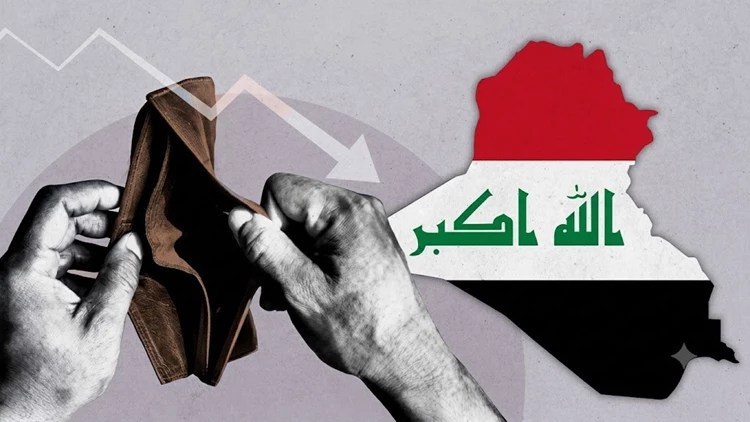
Iraq is facing growing economic uncertainty as concerns rise over a potential financial crisis that could affect both the economy and everyday life.
The government’s failure to submit the 2026 budget to Parliament has raised serious questions about its ability to manage public finances and meet its obligations. The situation has become even more challenging as the country deals with disruptions to oil exports following the closure of the Strait of Hormuz, one of the region’s most important energy shipping routes.
Many observers believe the budget delay is no longer a routine political issue. Instead, it has developed into a deeper structural problem that could impact salaries, public services, investment projects, and employment opportunities for graduates.
The absence of a new budget has already affected the investment sector. Hundreds of infrastructure and development projects now face uncertainty, while businesses linked to construction and government contracts are struggling to plan for the future.
Experts warn that operating without an approved budget creates additional risks. Without a clear legal framework, monitoring public spending becomes more difficult, increasing concerns about inefficiency and misallocation of funds.
At the same time, the government has limited room to maneuver. This has increased fears that economic difficulties could eventually lead to broader social challenges if solutions are not found quickly.
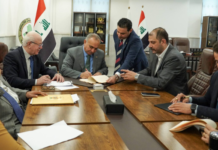
Member of Parliament Jamal Kojar, who serves on the Parliamentary Finance Committee, said the government’s continued operation without a budget effectively reduces its role to that of a caretaker administration.
According to Kojar, the government currently lacks the legal authority needed for major investment and development spending. He explained that spending is now largely restricted to operational expenses such as salaries and daily government costs under the monthly “1/12” spending mechanism.
Kojar also suggested that the government’s plan to submit the 2027 budget next October may indicate that the 2026 budget will never be approved.
He argued that if officials intended to pass a 2026 budget, they would have submitted it months ago. He also warned that the lack of an investment budget could freeze financial entitlements for many citizens while disrupting projects, businesses, and economic activity across the country.
Economist Hashim al-Haboubi also raised concerns about the government’s economic approach.
He criticized Prime Minister Ali al-Zaidi’s decision to take a group of Iraqi businessmen to Washington, arguing that such visits can create opportunities for intermediaries and commissions rather than direct agreements between governments and international companies.
According to al-Haboubi, economic negotiations should be led primarily by ministers responsible for financial and economic affairs, supported by a small number of government advisers. He believes this approach would help protect public funds, reduce the risk of corruption, and ensure that contracts are signed directly with international partners.
The current crisis has once again highlighted Iraq’s heavy dependence on oil revenues.
For years, the country’s economy has relied largely on crude exports from southern ports. Critics argue that insufficient efforts were made to diversify export routes or strengthen alternative channels that could protect government revenues during periods of disruption.
The situation is further complicated by ongoing disagreements between Baghdad and the Kurdistan Region over oil exports and revenue sharing.
The federal government still lacks full control over export operations in the Kurdistan Region, while regional authorities have remained reluctant to resume oil exports under Baghdad’s supervision. These unresolved disputes continue to add pressure to an already fragile economic environment.
As Iraq moves deeper into 2026 without an approved budget, economists and lawmakers warn that the country faces a critical period. Without clear financial planning, investment spending, and long-term economic reforms, the risks to growth, employment, and public services could continue to increase in the months ahead.