Iraqis are closely watching the 2027 federal budget as the country faces growing financial pressures and questions about the government’s ability to cover its expenses in the coming year.
Government employees, retirees and other groups that depend on state payments are waiting to see how the budget will address operational spending, while farmers, contractors and private companies are looking for answers regarding delayed payments and financial obligations owed to them.
At the same time, the government continues to rely on borrowing to pay salaries and secure essential goods and services. Lawmakers say the upcoming budget will focus on maintaining government spending while introducing economic reforms aimed at dealing with the current financial challenges.
Economic expert Dr. Safwan Qusay said Iraq still lacks a specialized company that can purchase debts at discounted rates, a system commonly used in many countries to help manage financial obligations more effectively.
According to Qusay, Iraq needs a clear and organized mechanism for repaying both domestic and foreign debt. He noted that obtaining loans is often easier than creating a sustainable repayment plan, making debt management a key issue for the country’s financial future.
He also stressed that reducing the financial crisis requires stronger tax collection from companies operating in Iraq, recovering unpaid debts owed to the government and making better use of credit programs offered by the Central Bank of Iraq.
Economic expert Abdul Rahman Al-Mashhadani warned that the government’s assumptions for next year’s oil prices may be difficult to rely on because of ongoing regional conflicts, lower export levels and uncertainty in global energy markets.
He said the initial estimate for the 2027 budget is around 150 trillion Iraqi dinars. Of that amount, approximately 135 trillion dinars would be allocated to operational expenses such as salaries and day-to-day government costs, while only 15 trillion dinars would be directed toward investment projects.
Al-Mashhadani believes this imbalance could deepen Iraq’s financial deficit and limit the government’s ability to invest in infrastructure and economic development.
He also pointed to concerns about declining Central Bank reserves. According to Al-Mashhadani, the bank continues to sell foreign currency to finance imports while receiving limited new dollar inflows, putting additional pressure on reserves. He said recent inflows to the Central Bank have reportedly not exceeded $1 billion.
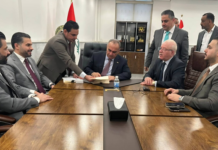
Meanwhile, Finance Committee member Mohammed Al-Shammari said discussions are ongoing between Parliament’s Finance Committee and the Ministry of Finance regarding the submission of the 2027 budget. He expects the draft budget to reach Parliament by mid-October.
Al-Shammari reassured citizens that salary payments remain secure and said there are currently no concerns about their disbursement.
He added that the new budget will place greater emphasis on economic and financial reforms designed to address the challenges facing the country. The Finance Committee is closely monitoring the drafting process and coordinating with government agencies to review the budget’s details before it reaches Parliament.
According to Al-Shammari, an early submission would give lawmakers enough time to study the budget, review spending allocations and make any necessary amendments before final approval.
He emphasized that completing and submitting the budget as quickly as possible is important because it will determine government spending priorities, guide economic policy and help shape Iraq’s financial direction for the coming years.
As Iraq prepares for 2027, the budget is expected to play a critical role in addressing fiscal pressures, managing debt, protecting salaries and balancing the country’s economic priorities in an increasingly challenging environment.