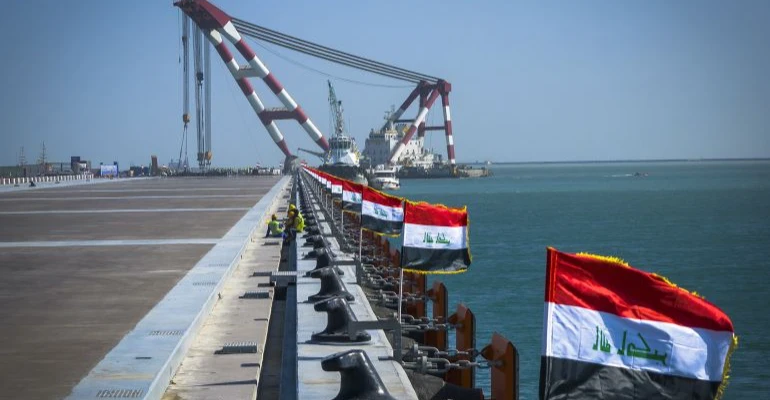
A new report from Chatham House says Iraq, Syria, and Lebanon are trying to use their geographic position between the Gulf and Europe to become important transit hubs for energy, trade, transportation, and digital connectivity.
According to the report, recent disruptions around the Strait of Hormuz highlighted the risks of relying on a limited number of trade and energy routes. As a result, Iraq, Syria, and Lebanon are exploring new oil pipelines, railway connections, road networks, and fiber-optic corridors that could link the Gulf region with the Mediterranean and European markets.
One of the key projects discussed is a proposed Iraq–Syria oil pipeline that would transport Iraqi crude to the Mediterranean coast. The report says the project could eventually handle around 2 million barrels per day, giving Iraq an additional export route and reducing its dependence on the Strait of Hormuz. However, it notes that the route would complement, not replace, Gulf export channels, since Iraq’s major Asian customers such as China and India remain more easily served through Gulf ports.
The report also highlights other proposed projects, including:
- Expanding Iraqi oil exports through Turkey’s Ceyhan port.
- Reviving the Iraq–Jordan pipeline project to Aqaba on the Red Sea.
- Restoring railway links connecting Lebanon, Syria, Iraq, Turkey, and Gulf countries.
- Developing digital corridors through new fiber-optic networks across Iraq and Syria.
- Strengthening the role of Mediterranean ports such as Tripoli in Lebanon as gateways for regional trade.
Despite these ambitions, Chatham House warns that major obstacles remain. The report points to security challenges, regional conflicts, attacks on energy infrastructure, political fragmentation, corruption, and weak state institutions as significant risks.
The report argues that building pipelines, railways, and trade corridors alone will not guarantee greater sovereignty or economic strength. Success will depend on whether Iraq, Syria, and Lebanon can strengthen government institutions, improve governance, protect infrastructure, and ensure that the benefits of these projects reach the wider population rather than a small group of political and economic elites.
Its overall conclusion is that the changing regional landscape offers a rare opportunity for Iraq, Syria, and Lebanon to become important connectors between the Gulf, the Mediterranean, and Europe, but turning that opportunity into lasting economic and strategic gains will require substantial reforms alongside infrastructure development.