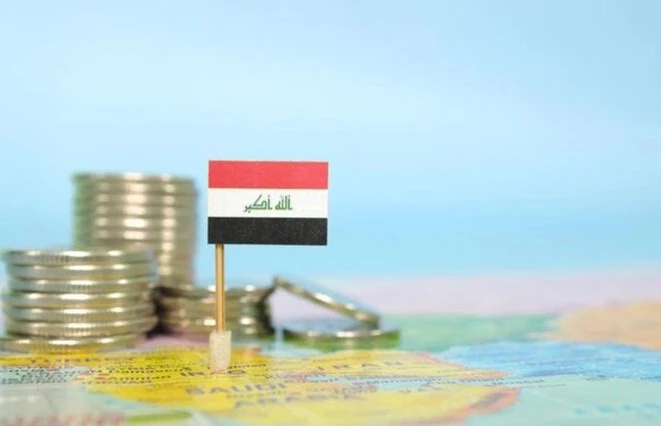
Former Iraqi MP Yasser Al-Husseini said on Thursday that the government still has the option of using domestic borrowing to finance public spending, noting that Iraq’s three-year budget law already contains provisions allowing the state to adopt that approach during periods of financial strain.
Al-Husseini told local media that discussions with several candidates for ministerial positions in the incoming government revealed what he described as a lack of clear economic planning for addressing Iraq’s worsening fiscal pressures.
According to him, many candidates failed to provide “realistic remedies” for the economic crisis and instead relied on temporary or short-term solutions without comprehensive plans to deal with falling revenues and liquidity shortages.
He stressed that the three-year budget framework explicitly permits the government to resort to internal borrowing in order to cover operational expenditures and fulfill financial obligations, including salaries and essential state spending.
Al-Husseini also warned that many of the financial reserves and funds previously used by the government to bridge budget gaps have now been largely depleted after repeated borrowing over recent years, leaving limited liquidity available.
His comments come amid growing debate inside Iraq over how the state will manage mounting fiscal pressures tied to oil revenue fluctuations, export disruptions, and rising expenditure commitments. Iraqi officials and economic experts have recently discussed several emergency financing options, including domestic borrowing, activating non-oil revenues, and restructuring spending priorities to protect salaries and social welfare payments.