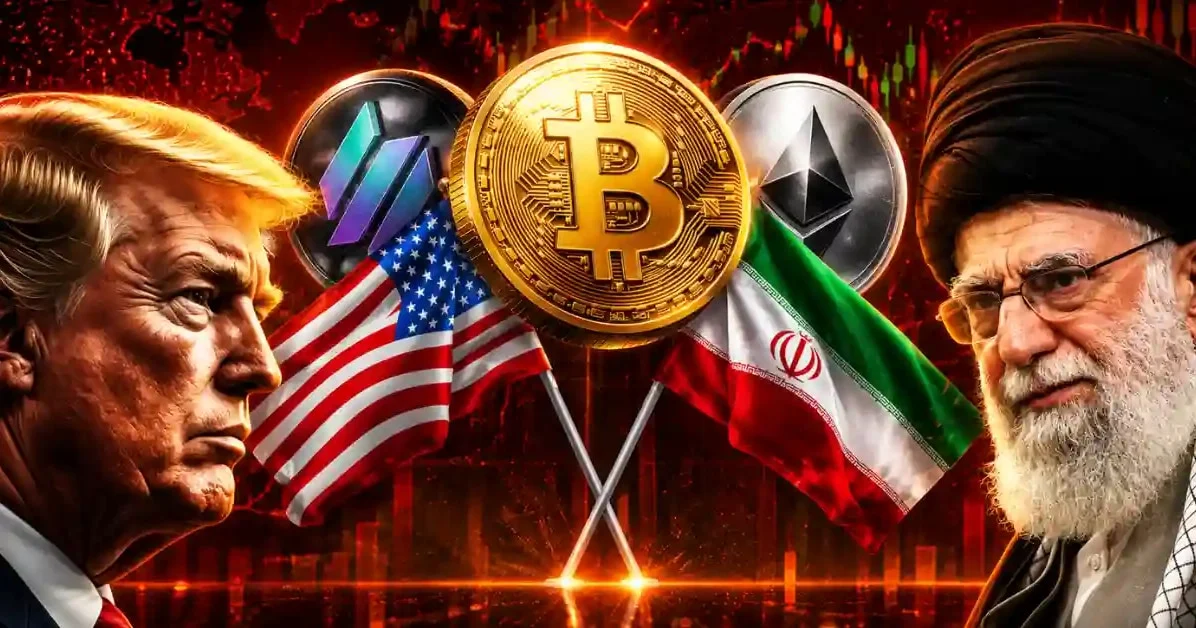
U.S. President Donald Trump said a peace agreement between the United States and Iran could be signed on Sunday, but Iranian officials have pushed back on that timeline, creating uncertainty about when a final deal might actually be reached.
The announcement has attracted significant attention from financial and cryptocurrency markets because the proposed agreement is expected to lead to the reopening of the Strait of Hormuz, one of the world’s most important energy shipping routes.
In a post on Truth Social, Trump said the deal was scheduled to be signed “tomorrow” and stated that the Strait of Hormuz would be reopened to all shipping immediately afterward.
Pakistan also signaled that negotiations were close to completion. Prime Minister Shehbaz Sharif said the final text of the agreement had been completed and suggested that an electronic signing could take place within the next 24 hours.
However, Iran offered a different view. Foreign Ministry spokesperson Esmaeil Baghaei said that while progress had been made, no agreement would be signed on Sunday.
According to Baghaei, discussions are still ongoing and the exact signing date has not yet been finalized. His comments have left markets waiting for further confirmation from all sides.
The potential reopening of the Strait of Hormuz is a major focus for investors. The waterway is one of the world’s most important energy corridors, carrying a large share of global oil and gas shipments.
A reduction in regional tensions could help lower energy prices, ease inflation concerns, and improve investor confidence across global markets. Such developments often encourage investors to move money back into riskier assets, including cryptocurrencies.
Some crypto analysts believe a successful peace agreement could provide short-term support for Bitcoin and the broader digital asset market. Lower geopolitical risk and improved market sentiment could encourage fresh investment into crypto after months of uncertainty.
Bitcoin was trading near $64,200 as investors weighed the potential impact of the negotiations. Despite the recent recovery, traders remain cautious because institutional demand has yet to fully return.
Recent data showed continued outflows from spot Bitcoin exchange-traded funds (ETFs), a sign that some large investors remain hesitant. ETF flows have become one of the most important indicators for Bitcoin’s near-term direction.
Analysts are also watching broader market conditions, including liquidity levels and investor appetite for risk. Some research firms continue to warn that Bitcoin could face further downside if institutional demand remains weak.
For now, market participants are closely monitoring developments surrounding the U.S.-Iran talks. A confirmed agreement and reopening of the Strait of Hormuz could remove one major source of global uncertainty and provide support for financial markets.
However, many traders believe that a lasting recovery in Bitcoin and other cryptocurrencies will still require stronger investment inflows and improving market fundamentals beyond geopolitical developments alone.