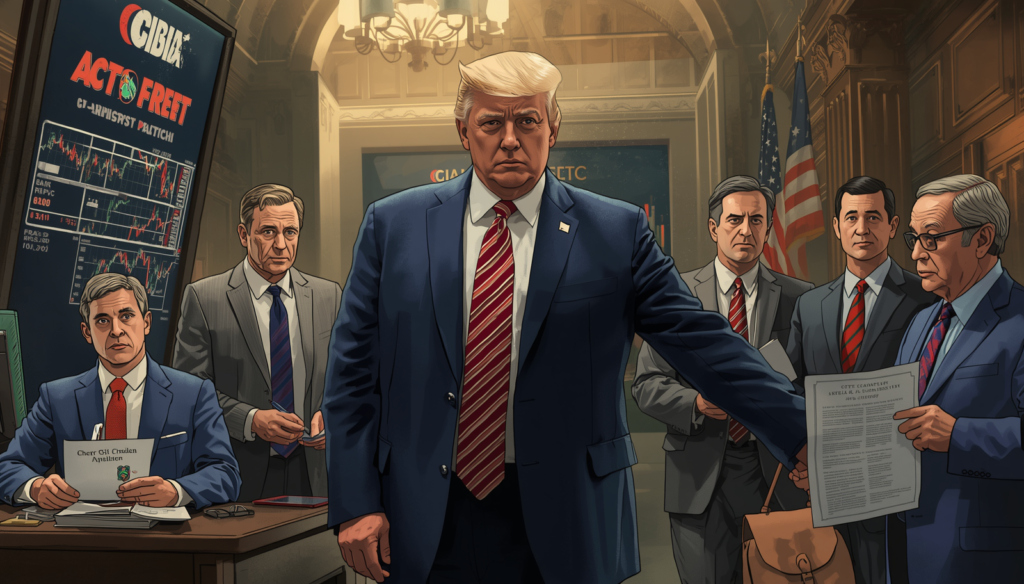
US regulators are looking into whether insider information about military plans in Iran was used to make money in oil markets.
The probe is being led by the Commodity Futures Trading Commission, which is investigating unusual trading activity on major exchanges like CME Group and Intercontinental Exchange.
Here’s what raised red flags.
In at least two cases, massive oil trades happened just minutes before major announcements from the White House. In one instance, billions of dollars in trades were placed shortly before a decision to delay strikes on Iran. In another, similar activity appeared right before a ceasefire announcement.
In both situations, the trades lined up almost perfectly with what happened next in the market—oil prices dropped, and whoever made those trades could have profited heavily.
Now regulators want to know: was this just smart trading… or did someone have inside information?
To find out, they’ve asked for something called “Tag 50” data. This helps identify exactly who placed each trade, acting like a digital fingerprint for investigators.
At the same time, lawmakers are trying to tighten the rules.
A new bill—the Public Integrity in Financial Prediction Markets Act of 2026—aims to stop government officials from using private information for personal gain. It would apply to politicians, government employees, and others who might have early access to sensitive decisions.
The issue isn’t limited to traditional markets either.
Prediction platforms like Kalshi and Polymarket are also under pressure. These platforms let people bet on real-world events, and regulators say insider trading rules still apply there too.
Both companies have already started adding safeguards—like monitoring systems and restrictions—to stop political figures from betting on events they can influence.
The bigger concern is trust.
If people with inside knowledge can trade ahead of major decisions—especially something as serious as military action—it raises serious questions about fairness and market integrity.
That’s why regulators are digging deeper, and why new rules could soon follow.