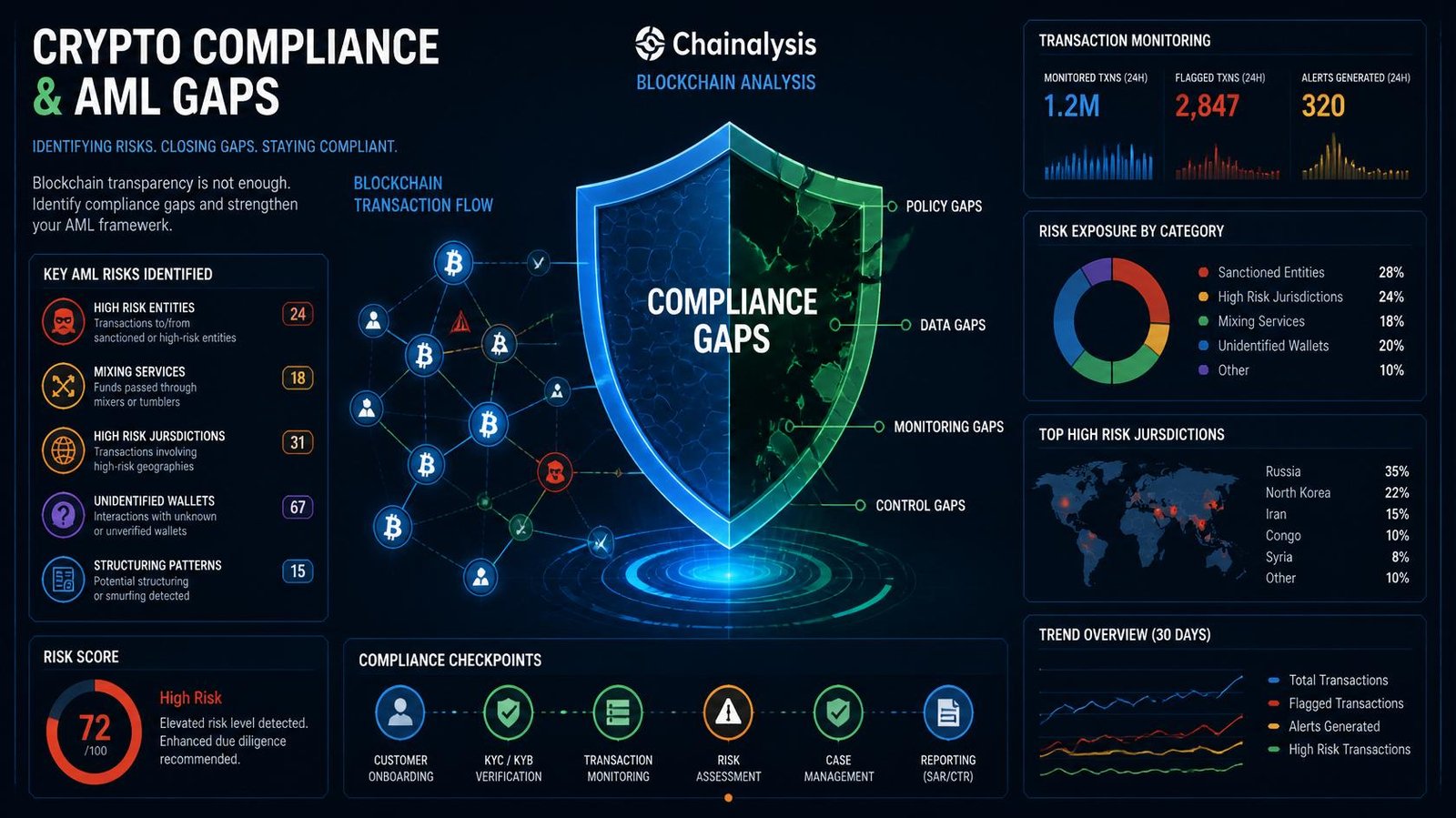
Chainalysis says crypto companies entering the market in 2026 are starting with much stronger compliance systems than many older firms had just five years ago.
According to a new report preview released on May 27, nearly 47% of crypto organizations launched in 2026 are already using alert systems that would have ranked among the strictest in the industry back in 2020.
The report shows how quickly compliance standards in the crypto sector have improved. Chainalysis measured factors such as alert sensitivity, severity levels, and minimum dollar amounts used to flag suspicious activity.
The company said compliance tools are no longer seen as something only large exchanges need. Instead, they are becoming a basic part of operating in the crypto industry.
Even with stronger standards, Chainalysis warned that major gaps still remain, especially when it comes to indirect exposure. Direct exposure means funds coming straight from a known illegal source. Indirect exposure involves funds moving through one or more wallets before reaching a platform.
According to the report, this indirect monitoring is still one of the weakest areas in crypto compliance. Alert thresholds for activities linked to ransomware, scams, darknet markets, fraud shops, and sanctioned regions are often set 10 to 20 times higher for indirect exposure than for direct exposure.
Chainalysis also found that traditional banks continue to use stricter alert systems than crypto exchanges.
For indirect exposure involving non-illicit transactions, crypto exchanges set average alert minimums around $950, while traditional financial institutions set theirs much lower at about $150.
The difference remains even for illegal activity. Crypto exchanges reportedly trigger alerts for illicit flows starting around $100, while banks start monitoring at roughly $55.
The report comes as compliance pressure continues to grow across the crypto market. Chainalysis recently partnered with Polymarket to help monitor insider trading and market manipulation after the prediction platform’s monthly trading volume crossed $7 billion.
The company also highlighted increasing concerns around anti-money laundering controls, stablecoin monitoring, blockchain bridge risks, and North Korean cybercrime activity.
According to Chainalysis, North Korean-linked hackers stole more than $2 billion in cryptocurrency during 2025, increasing pressure on the industry to improve transaction monitoring and strengthen security systems.