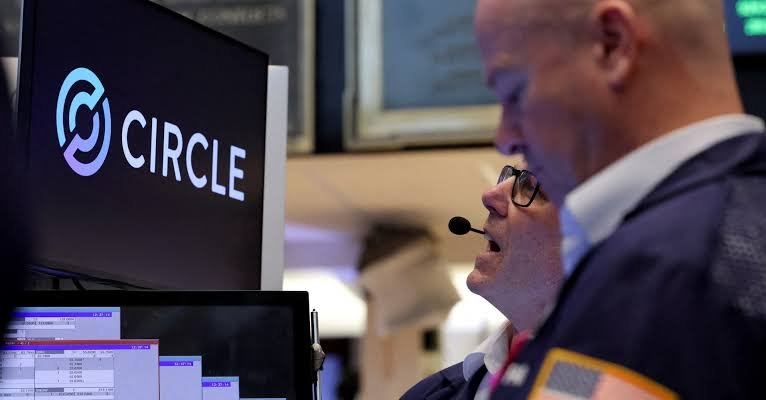
Circle has asked the US Securities and Exchange Commission (SEC) to treat qualifying payment stablecoins as cash under its proposed crypto fundraising rules. The company also wants the capital haircut applied to these stablecoins in broker-dealer calculations reduced from 2% to zero.
In a blog post published on October 28, Circle explained that it had submitted its comment letter on October 20, the final day of the SEC’s consultation period. The USDC issuer supports the proposed Regulation Crypto Assets framework but wants clearer rules for using stablecoins in payments and settlements.
Circle wants qualifying stablecoins treated like cash
In its filing, Circle asked the SEC to coordinate the proposed rules with the GENIUS Act. It wants only payment stablecoins that comply with the GENIUS Act to qualify as payment or settlement assets under the framework.
The company also wants regulators to clearly separate the token being sold from the stablecoin used to pay for it. Circle argues that accepting stablecoins as payment should not automatically make their issuers responsible for the fundraising company’s regulatory obligations.
For qualifying dollar stablecoins that can be redeemed one-to-one for US dollars, Circle wants their value to be calculated at the equivalent dollar amount. It also wants consistent treatment when stablecoin payments are counted toward fundraising limits and when companies use rules designed for securities offerings made for cash.
The SEC’s proposal, introduced on August 18, includes two fundraising exemptions. One would allow eligible companies to raise up to $5 million over four years, while the other would permit fundraising of up to $75 million within 12 months.
Both options would require companies to provide disclosures. The larger exemption would also require financial statements and ongoing reports. Antifraud and antimanipulation protections would remain in place.
Circle wants the broker-dealer haircut reduced to zero
The SEC staff addressed payment stablecoins in February, saying broker-dealers could apply a 2% haircut to qualifying stablecoin holdings when calculating their net capital requirements.
A haircut reduces the value of an asset that a broker-dealer can count toward its capital. The current guidance applies to the market value of whichever is greater between a broker’s long or short proprietary stablecoin position.
SEC Commissioner Hester Peirce supported the approach and said the agency should consider updating its capital rules to better account for payment stablecoins.
Circle now wants that 2% haircut removed completely, provided stablecoins meet clear and objective safeguards. The company also called for appropriate accounting rules and customer-reserve treatment.
However, Circle noted that recognizing stablecoins as cash under the proposed fundraising rules would not automatically settle how they should be treated under broker-dealer customer reserve requirements.
Hyperliquid Policy Center also submitted recommendations
The Hyperliquid Policy Center submitted a separate proposal on October 19, asking the SEC to make five changes covering airdrops, secondary trading, developer protections, automated buybacks, and state securities requirements.
The organization wants clearer rules on whether onchain protocols and other intermediaries can support secondary trading of tokens distributed under the proposed exemptions.
It also raised concerns about the proposed safe harbor for crypto projects. The group’s argument is that some projects may be unable to certify that an investment contract has ended because their legal advisers believe no investment contract existed in the first place.
The SEC’s proposal includes a conditional safe harbor that could allow a crypto asset to stop being subject to an investment contract once the required conditions are met.
Circle also wants clearer rules for validator operations
Another part of Circle’s request focuses on validator operations and ongoing network development.
The company wants the SEC to clarify that maintaining a known validator set after a blockchain network becomes functional should not automatically be treated as an essential managerial effort. It also wants developers to have protection when continuing to improve and maintain functioning networks.
Circle highlighted its own Arc blockchain in this discussion. The company launched Arc’s mainnet on September 16, featuring USDC transaction fees, institutional validators, and tokenized funds from launch.
Arc is designed to support Ethereum-compatible applications and settle transactions in less than one second. Its validator group includes major financial institutions such as BlackRock, DTCC, Visa, Mastercard, and Standard Chartered.
Circle has also been pushing for changes to European stablecoin regulations. On October 2, it asked the European Commission to replace certain bank deposit requirements under the Markets in Crypto-Assets (MiCA) framework with liquidity-based requirements.
The company challenged rules requiring at least 30% of stablecoin reserves to be held in commercial bank deposits, rising to 60% for issuers classified as significant.