Circle is stepping up its efforts in South Korea by hosting an exclusive industry event in Seoul later this month as it looks to build stronger relationships with banks, crypto exchanges, and payment companies.
The event, called Current Seoul, is scheduled for July 23 at Josun Palace and will focus on the theme “Korea at a Crypto Inflection.” It is expected to bring together leaders from the banking, crypto, payments, and technology sectors to discuss regulations, industry trends, and potential business partnerships.
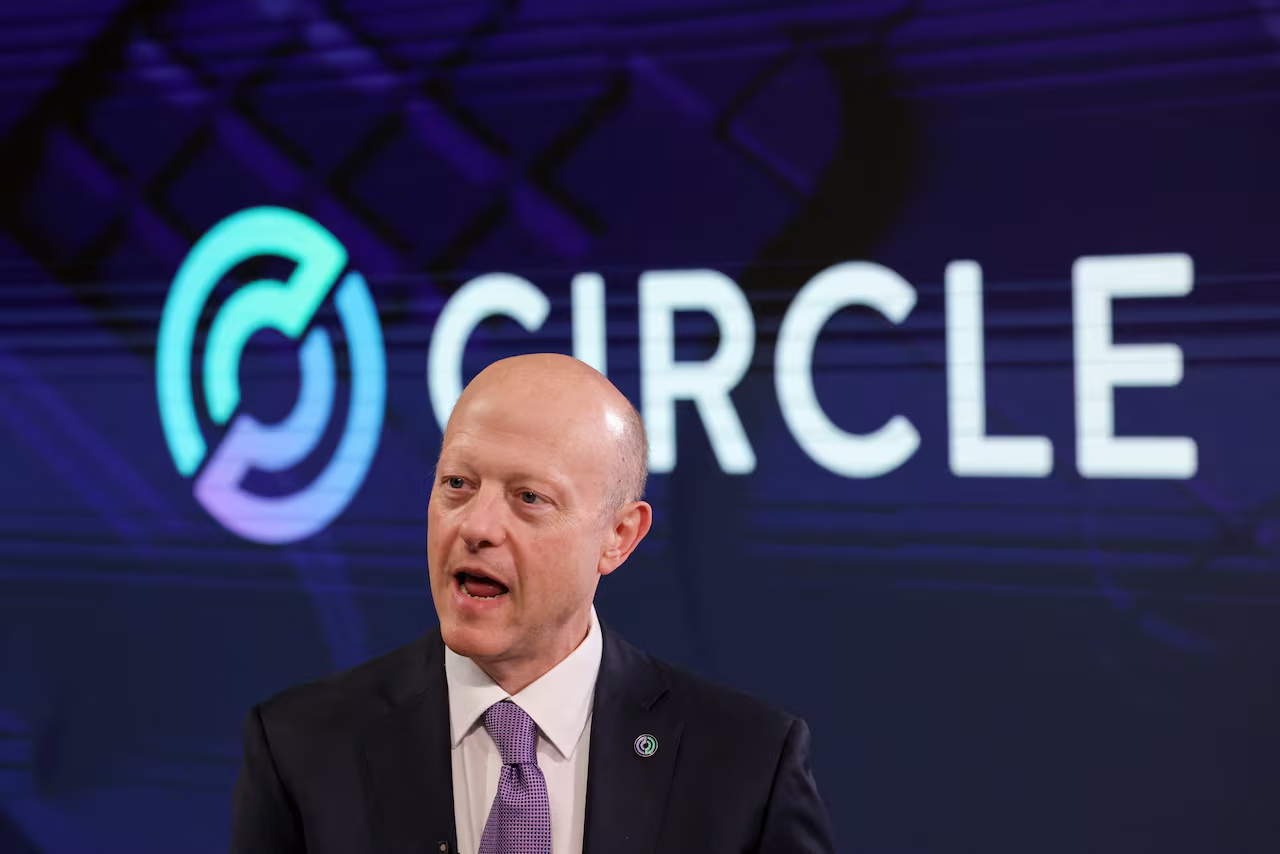
The move follows Circle CEO Jeremy Allaire’s visit to South Korea in April, where he met with executives from major financial institutions and crypto exchanges, including KB Kookmin Bank, Shinhan Bank, Hana Bank, Upbit, and Bithumb. Discussions centered on possible collaborations and expanding the use of Circle’s products and services in the country.
Circle’s leadership team, including senior executives responsible for strategy, policy, and business development, will participate in the event. Representatives from South Korea’s financial industry are also expected to speak.
Allaire previously described South Korea as an attractive market due to its advanced technology sector, strong participation in digital assets, and established regulatory environment. He also expressed interest in working with Korean companies through the Circle Payments Network to improve cross-border payment services.
The company’s expansion efforts come shortly after a major milestone in the United States. On July 10, Circle received final approval from the U.S. Office of the Comptroller of the Currency to establish Circle National Trust, a federally regulated trust bank. The new institution will initially provide digital asset custody services for Circle and its affiliates and may eventually support the management of USDC reserves.
Circle has also been strengthening its banking partnerships. Standard Chartered recently launched a service that allows eligible institutional clients to mint and redeem USDC through the bank’s platform, while BNY expanded its support for USDC by integrating the stablecoin into its digital asset custody platform.
At the same time, competition in the stablecoin market continues to intensify. Circle faces growing pressure from new projects offering alternative business models, including revenue-sharing arrangements that distribute reserve income among participating companies rather than keeping it with the issuer.
As the stablecoin sector evolves, Circle’s latest push into South Korea highlights the company’s strategy of expanding institutional partnerships and increasing USDC adoption in key international markets.