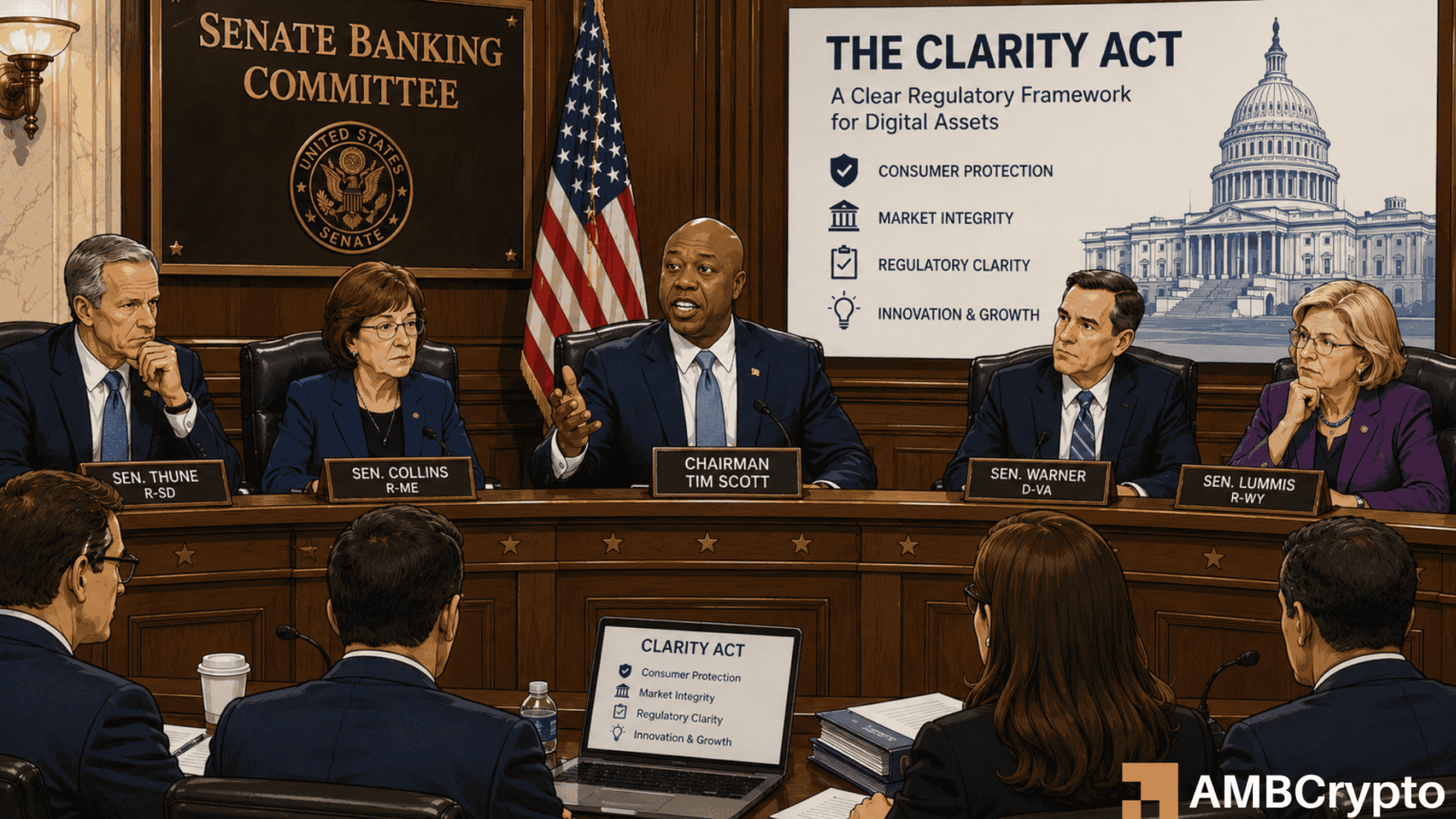
The CLARITY Act is moving closer to a possible vote in the U.S. Senate next month, but lawmakers are still trying to resolve disagreements over ethics and conflict-of-interest rules.
According to David Nage, Managing Director and Portfolio Manager at Arca, most of the major issues surrounding cryptocurrency market structure legislation have already been worked out. After meeting with Senate staff and policymakers in Washington, Nage said he believes lawmakers and the crypto industry are about 80% to 85% aligned on the substance of the bill.
The legislation, officially called the Digital Asset Market Clarity Act, has already gained bipartisan support in committee and is now moving through the next stages of the legislative process.
Nage said the biggest remaining obstacle is no longer the regulation of digital assets themselves. Instead, the debate has shifted toward conflict-of-interest rules that would prevent government officials from benefiting from crypto-related business activities while holding public office.
According to Nage, most lawmakers generally agree that such restrictions should exist. The main discussion now focuses on how those rules should be applied and enforced.
He suggested a uniform approach that would apply the same restrictions to the President, Vice President, members of Congress, and executive branch officials without creating special exemptions.
If lawmakers can reach an agreement on these ethics provisions, Nage believes the bill could reach the Senate floor for a vote sometime in mid-to-late July after Congress returns from its recess.
Supporters of the legislation say it includes several important measures aimed at strengthening oversight of the digital asset industry while providing greater legal clarity.
One provision would allocate $150 million to law enforcement agencies to help investigate cryptocurrency fraud, theft, and other digital asset-related crimes. The bill would also allow exchanges and stablecoin issuers to temporarily freeze suspicious transactions while authorities conduct investigations.
The legislation would further require digital asset companies to comply with anti-money laundering rules and reporting requirements similar to those already imposed on traditional financial institutions.
Another key section of the bill has attracted strong support from the cryptocurrency industry. The proposal includes language designed to protect blockchain developers, validators, and node operators who do not directly control customer funds. Supporters argue that these infrastructure providers should not be treated as money transmitters under federal law.
Industry leaders say these protections would provide legal certainty for software developers and network operators while maintaining oversight of businesses that actually hold or manage customer assets.
However, Nage warned that delays remain possible. If lawmakers fail to resolve the ethics dispute before the upcoming congressional recess, the bill could face significant delays. Some supporters fear that if the legislation does not advance during the current session of Congress, meaningful action on crypto market structure rules could be pushed back for years.
For now, many industry observers believe the CLARITY Act remains one of the most important cryptocurrency bills under consideration and could play a major role in shaping the future regulatory framework for digital assets in the United States.