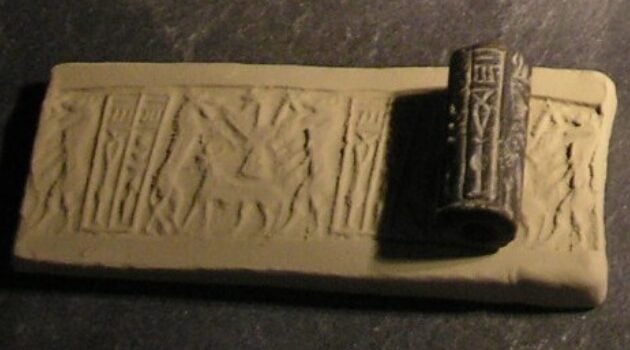
Cylinder Seal presents a very ambitious idea: use a digital Iraqi dinar not just as a payment tool, but as an engine to push industrial growth, reduce imports, widen banking access, and strengthen economic sovereignty.
What makes the idea interesting
1. It treats currency as economic policy, not just money movement
Most central bank digital currency ideas focus on faster payments. This goes much further. It tries to make the currency itself shape spending behavior—especially steering demand toward Iraqi-made goods.
The merchant tier model is the big innovation. Instead of traditional tariffs, it uses transaction fees and spending rules to favor domestic producers. That’s a very different approach.
2. It targets real Iraqi structural problems
The proposal is trying to address issues people talk about constantly:
- Heavy import dependence
- Weak non-oil production
- Large informal economy
- Low banking penetration
- Dollarization pressure
Those are real problems, so the proposal is aimed at meaningful pain points.
3. Offline payments could matter in Iraq
The NFC/Bluetooth offline design is practical, especially where connectivity is uneven. That solves a major issue many digital systems ignore.
4. Bringing informal workers into finance could be powerful
The micro-transaction credit history concept may be one of the strongest parts of the model.
A taxi driver or small vendor building credit through ordinary transactions is a big shift.
Where the big questions start
Industrial policy through payments is powerful — but hard to enforce
Restricting government salary spending toward certain merchant categories sounds attractive in theory.
But in practice people may route around restrictions:
- Side cash markets
- Proxy purchases
- Black-market workarounds
- Informal arbitrage
That risk is real.
Tiered fees can act like hidden taxes
An 8% fee on imports may protect domestic industry.
It could also raise prices for consumers if domestic production cannot meet demand fast enough.
That’s the classic protectionism challenge.
CBDC programmability raises governance questions
Expiring transfers, conditional spending, restricted merchant use—these can help policy.
They also raise questions:
- Who controls the rules?
- Can rules be changed politically?
- How is misuse prevented?
- How is privacy protected?
Those questions matter as much as the technology.
The projections may be very optimistic
$7.5–12.5 billion annual benefit from a $3–5 million build is a bold claim.
Possible? Maybe.
But it likely depends far more on:
- industrial policy execution
- banking reform
- legal reform
- political buy-in
- merchant adoption
than software alone.
Technology rarely fixes structural political-economy problems by itself.
The strongest idea in the paper
Honestly, the most compelling part may not be the CBDC itself.
It may be this idea:
Use digital payments as a way to formalize the informal economy and unlock credit.
That could matter enormously.
That alone could be transformative.
Big picture
Cylinder Seal is less a payment project and more a national economic operating system proposal.
That’s why it stands out.
Its strength:
- unusually coherent vision
- tied to Iraq-specific realities
- combines payments, trade policy, industrial policy and inclusion
Its challenge:
- enforcement complexity
- governance risks
- political resistance
- optimistic economic assumptions
My blunt read
As a concept: very serious and much more sophisticated than most CBDC proposals.
As a guaranteed economic solution: unproven.
As a pilot worth testing: arguably yes.
It’s one of those ideas where the technology may work, but success would depend much more on institutions than code.