CBI Protects Pre-Devaluation Import Transfers
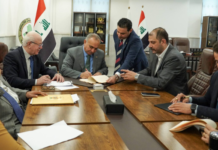
2026-10-10 Shafaq News- Baghdad Iraqi traders should not be charged exchange-rate differences on import-financing transfers due for execution before October 7 that were purchased and covered at the old rate, the Central Bank of Iraq (CBI) said on Saturday.
The CBI urged companies and traders to check with their banks and confirm the transfers had been executed. It has already provided banks with the funds needed to cover those transfers and was monitoring any delays and compliance with “applicable instructions and regulations.”
Traders facing delays or demands for additional payments can file complaints through the CBI’s official complaints platform for follow-up with the banks concerned.
The CBI is also working with banks and electronic payment companies to introduce special foreign-trade cards for small traders to facilitate import financing under mechanisms and regulations set by the bank.
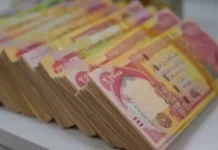
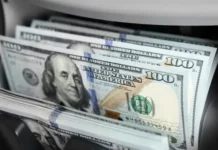
Iraq’s new exchange-rate structure took effect on October 7. Under the new structure, the CBI buys dollars from the Finance Ministry at 1,500 dinars, sells them to banks at 1,510, and sells cash dollars to the public at 1,520, while the previous end-user rate was 1,320 dinars per dollar. The bank said at the time that its foreign reserves guaranteed full and immediate coverage of external transfers used to finance trade, bank-card settlements, and cash dollar sales to travelers without restrictions.
Read more: Iraqi dinar devaluation sparks backlash from blocs inside the cabinet
Carlyle Ends Pursuit Of Lukoil’s Overseas Assets
2026-10-10 Shafaq News- Washington US investment firm Carlyle has stopped “actively pursuing” the acquisition of Russian oil giant Lukoil’s international assets after their agreement expired, S&P Global Energy’s Platts reported on October 9, citing a Carlyle spokesperson.
According to a document Lukoil submitted to Austrian authorities on September 30, the agreement signed in January 2026 expired at the end of July after failing to secure approval from the US Treasury Department’s Office of Foreign Assets Control (OFAC).
Lukoil, meanwhile, disclosed that it was engaged in intensive negotiations with other potential buyers for its international subsidiary, which holds most of its overseas assets.
The proposed sale followed US sanctions imposed on Lukoil in October 2025, which complicated its international operations. OFAC said on September 18 that it renewed its sanctions general license until October 22 to allow Lukoil to continue negotiating and enter contingent agreements for the sale of its international assets. Any actual sale, disposition, or transfer would still require separate OFAC authorization.
Lukoil’s international portfolio includes stakes in three European refineries with a combined processing capacity of 400,000 barrels per day, fuel retail networks across Central and Eastern Europe, and oil and gas projects in Azerbaijan, Iraq, and several other countries.
In Iraq, its assets include the West Qurna 2 oilfield, which accounts for approximately 10% of the country’s crude production and 0.5% of global oil supply. In July, Basra Oil Company Director General Bassem Abdul Karim told Shafaq News that negotiations with US energy company Chevron over the field’s development had made progress, with no major obstacles remaining to a final agreement. He explained that the state-owned company would manage West Qurna 2 temporarily for six months following Lukoil’s withdrawal while talks with Chevron continued.
Iraqi Economists Downplay Broad Price Surge After Dollar Hike
2026-10-10 Shafaq News- Baghdad Prices of goods in Iraq could decline if the dollar stabilizes between 1,600 and 1,630 dinars, an Iraqi economist told Shafaq News on Saturday, after the dollar fell to around 1,630 dinars in the local market.
Nabil Al-Marsoumi said the decline could have a positive effect on local prices, noting that traders had priced many goods at around 1,600 dinars to the dollar even before the exchange-rate adjustment.
Manar Al-Obaidi, head of the Iraq Future Foundation for Economic Studies and Consultations, cautioned against drawing early conclusions about the impact of the government’s decision. He cited Iraq’s 2021 experience, when the official dollar rate rose from 1,190 to 1,460 dinars —a 22.7% increase— while food prices rose by about 5% during the year, according to World Bank figures. Al-Obaidi said the figures show that changes in the exchange rate do not necessarily translate into equivalent increases across all goods.
Al-Obaidi called for monitoring prices over the coming weeks and reviewing inflation data over the next several months before assessing the impact on purchasing power and household finances.
He attributed some of the criticism of the decision to a lack of clear communication about its economic objectives and expected results, adding that speculation before the announcement had already heightened public concern.
Read more: Source: Iraqi leaders backed dollar hike before announcement
Prime Minister Ali Al-Zaidi addressed parliament over the exchange-rate decision. He said the government had faced three alternatives: compulsory savings that would leave employees waiting for future payment, paying salaries every 45 days or borrowing more despite the country’s existing debt burden.
The cabinet approved the exchange-rate adjustment following an emergency recommendation from the finance minister and the Central Bank governor. Under the new rates, the dollar is priced at 1,500 dinars for purchases from the Finance Ministry, 1,510 for banks and 1,520 for the public.
Read more: Iraqi dinar devaluation sparks backlash from blocs inside the cabinet
EIA: US Crude Imports From Iraq Remain Zero
2026-10-11 Shafaq News- Baghdad/ Washington US crude oil imports from Iraq remained at zero for a second consecutive week, data from the US Energy Information Administration (EIA) showed on Sunday.
Overall US crude imports from nine major suppliers averaged 6.145 million bpd, up 1.067 million bpd from 5.078 million bpd the previous week.
Canada remained the largest supplier at 3.891 million bpd, followed by Venezuela at 624,000 bpd, Nigeria at 376,000 bpd, and Guyana at 354,000 bpd. Brazil supplied 301,000 bpd, Saudi Arabia 228,000 bpd, Mexico 186,000 bpd, Argentina 112,000 bpd, and Colombia 73,000 bpd. https://shafaq.com/en/Economy/EIA-US-crude-imports-from-Iraq-remain-zero
Dollar Edges Lower In Baghdad, Erbil
2026-10-11 Shafaq News- Baghdad/ Erbil The US dollar opened Sunday’s trading lower in Iraq, hovering around 163,000 dinars per 100 dollars.
According to a Shafaq News market survey, the dollar traded in Baghdad’s Al-Kifah and Al-Harithiya exchanges at 163,300 dinars per 100 dollars, down from Saturday morning’s 163,600 dinars.
In the Iraqi capital, exchange shops sold the dollar at 163,750 dinars and bought it at 162,750 dinars, while in Erbil, selling prices stood at 163,100 dinars and buying prices at 163,000 dinars.
Gold Prices Fall In Baghdad, Rise In Erbil
2026-10-11 Shafaq News- Baghdad/ Erbil On Sunday, gold prices hovered around 970,000 IQD per mithqal in Baghdad and Erbil markets, showing mixed movements, according to a Shafaq News market survey.
Gold prices on Baghdad’s Al-Nahr Street recorded a selling price of 963,000 IQD per mithqal (equivalent to five grams) for 21-carat gold, including Gulf, Turkish, and European varieties, with a buying price of 959,000 IQD. The same gold had sold for 965,000 IQD on Saturday.
The selling price for 21-carat Iraqi gold stood at 933,000 IQD, with a buying price of 929,000 IQD.
In jewelry stores, the selling price per mithqal of 21-carat Gulf gold ranged between 965,000 and 975,000 IQD, while Iraqi gold sold for between 935,000 and 945,000 IQD.
In Erbil, 22-carat gold was sold at 1,019,000 IQD per mithqal, 21-carat gold at 974,000 IQD, and 18-carat gold at 834,000 IQD. https://shafaq.com/en/Economy/Gold-prices-fall-in-Baghdad-rise-in-Erbil-1
South Korea’s Iraqi Oil Imports Fall 45.6%
2026-10-11 Shafaq News- Baghdad Iraq, OPEC’s second-largest oil producer, ranked fourth among South Korea’s crude oil suppliers in the first eight months of 2026, with exports falling 45.6% year-on-year to 38.344 million barrels, according to the Korea National Oil Corporation (KNOC).
The data showed that Iraqi crude shipments declined from 70.550 million barrels during the same period in 2025.
Saudi Arabia led the list with 196.215 million barrels, down approximately 15.6% from a year earlier, followed by the United States with 131.094 million barrels and the United Arab Emirates with 101.556 million barrels.
Kuwait ranked fifth with 36.708 million barrels, followed by Oman with 19.404 million barrels.