Iraq’s current financial challenges are the result of cash-flow pressures caused by exceptional regional circumstances, not a shortage of resources or a risk of state bankruptcy, according to Mudher Mohammed Saleh, financial and economic adviser to the Prime Minister.
Speaking on Saturday, Saleh said the government remains capable of paying salaries and meeting its key obligations as long as it continues to manage its fiscal and monetary tools effectively.
However, he warned that if the ongoing regional conflict extends into early next year and continues to disrupt oil exports, Iraq may need to rely on a combination of domestic borrowing, external financing, and revised spending priorities to cover its obligations.
Saleh emphasized that Iraq’s foreign currency reserves remain a major source of financial stability. He described these reserves as a safeguard that can help maintain stable financial flows during periods of uncertainty.
He also stressed that effective crisis management and faster economic reforms could help the country continue financing its budget despite the challenges created by regional tensions.
Iraq’s economy remains heavily dependent on oil exports, which provide the vast majority of government revenue.
According to data from the State Organization for Marketing of Oil (SOMO), Iraq earned more than $18 billion from exporting approximately 268 million barrels of crude oil during the first half of 2026. However, this revenue was significantly lower than the amount generated during the same period last year.
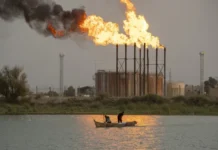
One of the main reasons for the decline was disruption to shipping routes through the Strait of Hormuz, which affected exports from Iraq’s southern oil terminals. Lower export volumes and reduced revenues have placed additional pressure on government finances while regular spending commitments have continued.
Finance Minister Faleh Al-Sari recently revealed the scale of those obligations.
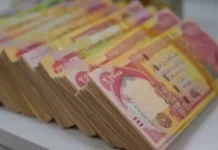
He said the government spends around 7.8 trillion Iraqi dinars each month on salaries, pensions, and social welfare payments. So far, the Ministry of Finance has reportedly disbursed approximately 3 trillion dinars and has around 1.5 trillion dinars in available liquidity.
Based on those figures, the government is facing a funding gap of roughly 3.3 trillion dinars, equivalent to about $2.5 billion.
The financial pressure is also affecting public services.
Health Minister Abdul Hussein Al-Mousawi noted that salary payments have become the government’s top priority, highlighting the strain on available resources and the difficult choices facing policymakers.
Despite these challenges, Saleh maintained that Iraq’s situation should be viewed as a liquidity-management issue rather than a solvency crisis. In his view, the country still possesses significant resources, including foreign reserves and future oil revenues, but must carefully manage cash flows during a period of economic and geopolitical uncertainty.
Looking ahead, the government’s ability to maintain financial stability will depend largely on the recovery of oil exports, the regional security situation, and the pace of economic reforms aimed at reducing Iraq’s dependence on oil revenues and strengthening alternative sources of income.