Tishwash: Washington confirms that the suspension of dollar shipments to Iraq is “temporary”.
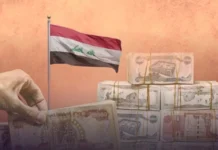
The US State Department confirmed that Washington has temporarily suspended dollar shipments to Iraq. A State Department spokesperson, according to a statement carried by Kurdish media outlets, said, “The transfer of US dollars to Iraq has been temporarily halted.”
The spokesperson added, “The United States has temporarily suspended some security cooperation activities with Iraq, while continuing joint counterterrorism efforts that enhance US national security.” lin
Tishwash: A parliamentary message to the framework: No deadline after Saturday, we will choose the prime minister.
Mahmoud al-Shammari, a member of the Services Bloc in the Iraqi Parliament, revealed on Thursday evening that members of Parliament intend to collect signatures and send an official letter to the President of the Republic to nominate a suitable person for the position of Prime Minister, in the event that the Coordination Framework does not reach an agreement on choosing a candidate by next Saturday.
Al-Shammari told Shafaq News Agency that “if the coordination framework does not reach an agreement to choose a candidate for the position of Prime Minister within the constitutionally specified period, then the members of the House of Representatives will have a different opinion on the matter.”
He added: “We are waiting for the leadership of the framework until next Saturday, and if they do not reach an agreement to choose the appropriate candidate for the position of Prime Minister, then the members of Parliament will collect signatures and send an official letter to the President of the Republic to nominate the appropriate person and get out of the political deadlock.”
The MP stressed that “the House of Representatives is capable of nominating the person as it is the legislative authority in the country and the highest authority in the Iraqi state,” noting that “the continuation of the situation as it is and the continuation of the caretaker government and 10 vacant ministries without a minister pushes us to intervene in the matter of choosing the candidate for the next government.”
A member of the coordination framework, Amer Al-Fayez, told Shafaq News Agency on Thursday that the ongoing meetings had led to important understandings to resolve the disputes, suggesting that the nomination of a candidate for the premiership would be decided within the next few hours.
With Iraq entering the post-election phase of President Nizar Amidi, attention is turning to the most important entitlement, which is the formation of the new government, amidst heated political debate within the coordination framework regarding the prime minister candidate.
The coordinating framework had set a date for a crucial meeting last Saturday, before postponing it to Monday, with the aim of deciding on a candidate for the premiership. However, the meeting ended without reaching a final agreement, so it was postponed to Wednesday, before being postponed again to Friday. link
************
Tishwash: Expected decision today: Al-Sudani is the most likely candidate for prime minister after the chances of Al-Maliki’s candidate diminished.
All eyes are on Saturday for a crucial meeting of the Coordination Framework forces, which is expected to end the debate over the name of the next prime minister, after postponing the decision that was scheduled for Friday, amid rapid developments in the positions of the political forces.
Well-informed political sources confirmed that the balance of power within the framework has clearly shifted in favor of the current Prime Minister, Mohammed Shia al-Sudani, after the leader of the State of Law Coalition, Nouri al-Maliki, realized the difficulty of passing his alternative candidate in light of the decline in political support for him.
According to the sources, the ball is back in Sudani’s court, who has become the most likely candidate to receive the official mandate to form the new government, in light of growing consensus within the Shiite forces.
The information indicated that Maliki showed some flexibility in his position during the last few hours, with indications that he would move towards supporting the consensus of the framework forces on assigning Al-Sudani, in order to avoid further political division.
Today’s meeting is expected to produce a decisive announcement regarding the appointment of the prime minister, in a move that could pave the way for a new political phase characterized by consensus and an attempt to contain the disputes within the Shiite political establishment. link
************
Tishwash: What will he choose? The Sudanese government faces Washington’s demands to cut the salaries of the Popular Mobilization Forces and target the factions.
The head of the Reconstruction and Development bloc, Bahaa al-Araji, revealed that there is a division within the coordination framework regarding the mechanism for choosing the next prime minister, between the “signatures” system adopted by the State of Law bloc and “direct voting,” stressing that Prime Minister Mohammed Shia al-Sudani is facing harsh American conditions, including cutting the salaries of the Popular Mobilization Forces and striking some factions .
Al-Araji said in a televised interview followed by Al-Sa’a Network that “Monday’s framework session resulted in the submission of 6 signatures from the State of Law coalition in favor of Basim Al-Badri, while Hadi Al-Amiri proposed the option of direct voting instead of signatures to choose the Prime Minister, and after his intervention the discussion moved to the selection mechanism .”
He added that “the proposed new mechanism is based on the candidate obtaining two-thirds of the votes of the leaders of the framework, and in the second stage two-thirds of the members of the House of Representatives from the framework. It was proposed by Al-Amiri, Al-Hakim and Al-Khazali, but it was rejected by the State of Law, and the discussion about it was postponed to the next session .”
He added that “the upcoming coordination framework meeting will not discuss the selection of the prime minister unless the selection mechanism is decided, with the direct voting option being the most likely to be fair .”
He pointed out that “Al-Asadi did not sign, despite being part of the Reconstruction and Development bloc, and expressed conditional approval related to the signing of other leaders in favor of Bassem Al-Badri, while the bloc did not adopt the mechanism of signatures at all and preferred to vote by raising hands as usual .”
He stressed that “choosing the prime minister is not the most important thing at the moment, but rather the unity of the coordinating framework, especially in light of international discussions related to the Iraqi political system .”
He added that “Al-Sudani prepared his government program before the elections, and it included restricting weapons to the state, and he rejects dealing with the issue with violence and prefers political and legal solutions .”
He explained that “the United States had put forward two main demands during the past period, which were to cut off the salaries of the Popular Mobilization Forces and to strike some factions, which Al-Sudani rejected .”
He explained that “the current stage includes American conditions, which does not mean accepting them, but it requires dealing with them under complex circumstances,” noting that “some strikes that targeted diplomatic interests contributed to strained relations and the departure of a number of missions .”
Al-Araji pointed out that “about 90% of diplomatic missions have left Iraq, especially the Arab ones, as a result of attacks targeting some countries, which has negatively affected the political and economic reality, including the delay in the flow of dollars into the country link
Tishwash: Sudanese advisor reveals two paths to enhance economic stability: food security is guaranteed.
On Friday, Mazhar Muhammad Salih, the economic advisor to the Iraqi Prime Minister, affirmed that the level of food security in the country remains within a safe range, pointing to two main trends that contribute to strengthening overall economic stability and providing a level of reassurance in conducting daily economic life.
Saleh explained to Shafaq News Agency that “the first trend is the continuation of the policy of broad government support for prices, especially in the basic paragraphs that are governing in the current fiscal policy.”
According to Saleh, this support includes “the food basket and strategic food stocks, in addition to support for medicine and the agricultural sector, especially grain production.”
He pointed out that “support also extends to fuel, social, economic and health services, without interruption,” noting that “official indicators issued by the Ministry of Trade confirm that the level of food security in the country is still within a safe range, which enhances the stability of domestic markets.”
He explained that “the second trend relates to the status of foreign reserves, which remain at stable levels and are sufficient to cover the external financing needs of trade for a period exceeding one year.”
According to the government advisor, “This stability is based on oil export revenues, which are the country’s main source of foreign currency.”
He added that “the value of foreign reserves is estimated at about $100 billion, which provides a relative margin of safety in managing external obligations and supports the stability of the exchange rate.”
Regarding external challenges, Saleh noted that “this stability comes amid delicate regional and international circumstances, with escalating concerns about geopolitical tensions, particularly those related to the potential disruption of navigation in the Strait of Hormuz, which is one of the most vital waterways for global oil trade,” suggesting that these tensions will have a limited impact in the medium term.
He stressed that “monetary management plays a pivotal role in achieving a balance between providing liquidity and maintaining price stability, as well as meeting the market’s need for foreign currency,” noting that “this balanced policy represents an essential tool for containing inflationary pressures.”
Saleh added that “these measures contribute to maintaining relative stability in the national economy, despite regional challenges, until tensions subside and conditions return to normal.”
The war that broke out on February 28, 2026, between the United States and Israel on one side, and Iran on the other, caused an almost complete paralysis of traffic in the Strait of Hormuz, the passage through which about 4.5% of total annual global trade passes, leading to a decline in navigation to very low levels.
As a result of the disruption to shipping through the Strait of Hormuz, Iraqi oil production has fallen sharply from 4.3 million barrels per day to 1.3 million barrels per day.
This decline has led to Iraqi exports falling to less than 800,000 barrels per day, and a loss of $128 million per day after oil production stopped, according to the “Eco Iraq” observatory.
Around 20 million barrels of oil pass through this strategic strait daily, and its closure has caused an increase in shipping and insurance costs and a rise in oil prices, raising fears of global economic repercussions.
A recent study published in the international journal Nature Food on April 16 showed that Iraq is among six countries unable to meet their food needs locally, amid a global gap in achieving self-sufficiency.
The study showed that achieving food security is not limited to the production of calories, but requires an integrated system that includes seven main categories: basic grains, fruits, vegetables, dairy products, meat, fish, and legumes.
She stressed that economic wealth does not guarantee food security, as many rich countries rely on imports to meet their needs, given the challenges of local production and natural resources. link