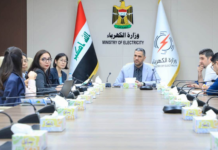
A new agreement reached in Najaf aims to expand the use of mechanized rice transplanting as part of efforts to improve water efficiency and support sustainable agriculture in the face of climate change.
The decision was made during a consultation meeting held on June 15 and organized by the Food and Agriculture Organization (FAO) in cooperation with government partners through a Green Climate Fund-supported project focused on strengthening the livelihoods of rural communities most affected by climate change.
The meeting brought together representatives from the Ministries of Agriculture, Water Resources, and Environment, as well as local officials and FAO experts.
Participants agreed to expand the mechanized rice transplanting program from pilot areas covering 100 donums to 800 donums during the current growing season. Farmers will be selected based on approved criteria, while joint field teams from the Agriculture Directorate, Water Resources Directorate, Farmers’ Association, and FAO will supervise implementation and monitor results.
Technical Deputy Minister of Agriculture Dr. Mithaq Abdul Hussein Al-Khafaji said the technology can help farmers increase productivity while using water more efficiently, making it an important tool for addressing current water challenges.
FAO Representative in Iraq Salah Hajj Hassan said the project provides an opportunity to build on successful pilot experiences and encourage wider adoption of climate-smart farming practices across the country.
The initiative is part of broader efforts to help Iraqi farmers adapt to climate change, conserve water resources, and maintain agricultural production under increasingly difficult environmental conditions.
Click here to see the full report.