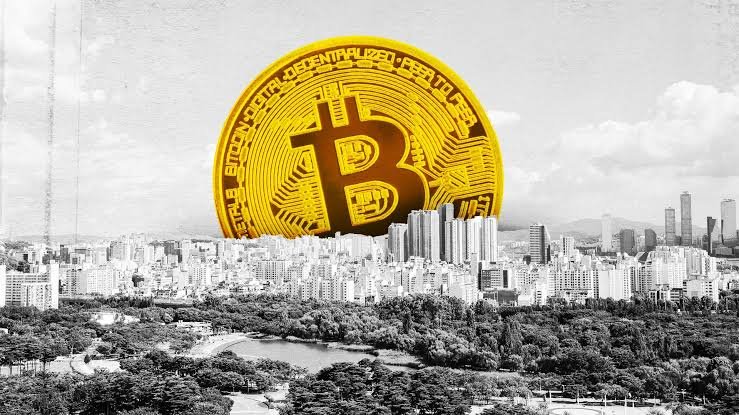
South Korea is pushing ahead with a major digital finance strategy that combines cryptocurrency adoption, tokenized securities, and digital banking technology.
The country is moving on three fronts at the same time: allowing thousands of companies to enter the crypto market, creating a legal framework for tokenized securities, and expanding trials of digital bank deposit tokens.
According to industry leaders, South Korea’s financial sector is gradually shifting away from being driven mainly by retail crypto traders. Instead, institutions are increasingly focusing on custody services, tokenization, digital payments, stablecoins, and regulated blockchain infrastructure.
One of the biggest changes involves corporate access to cryptocurrency markets.
Under plans introduced by South Korea’s Financial Services Commission, around 3,500 entities will be eligible to participate in a corporate crypto pilot program. This includes approximately 2,500 publicly listed companies and about 1,000 registered professional investors.
For years, companies in South Korea were effectively unable to trade cryptocurrencies through local exchanges because they could not obtain the required real-name banking accounts. The new pilot aims to gradually open the market while maintaining strict oversight.
The program is designed as a controlled rollout rather than unrestricted access. Regulators believe listed companies and professional investors are better equipped to manage risks associated with digital assets.
The move is also creating demand for institutional-grade custody services. Several financial and technology firms are already positioning themselves to serve corporate clients entering the crypto market.
At the same time, South Korea is building a legal foundation for tokenized securities.
Earlier this year, lawmakers approved amendments that formally recognize blockchain-based records as valid for securities issuance and ownership tracking. The new framework is scheduled to take effect in February 2027.
The legislation allows securities to be issued and managed using distributed ledger technology while remaining fully regulated under existing financial laws.
Rather than creating a separate market outside traditional regulation, tokenized securities will operate within the country’s existing financial system. Licensed institutions will continue to oversee issuance, trading, and investor protection requirements.
Financial infrastructure providers are already preparing for the transition. Work is underway to build systems that connect blockchain-based securities records with South Korea’s established securities settlement and custody networks.
Banks and asset managers have also begun testing tokenized investment products, including funds backed by Korean won-denominated assets.
Another major piece of South Korea’s digital finance plan is Project Hangang, the country’s deposit-token initiative.
Unlike cryptocurrencies, deposit tokens are digital versions of money already held in commercial bank accounts. Participating banks issue the tokens, while central bank infrastructure helps settle transactions between institutions.
The project has expanded significantly. What began with seven banks now includes nine participating banks, and testing has moved beyond simple payments.
Current trials include person-to-person transfers, biometric payment approvals, automatic conversion between traditional deposits and deposit tokens, and programmable government payments.
Authorities are also experimenting with digital vouchers and public-sector spending systems that allow funds to be used only under specific conditions. For example, payments can be restricted to certain merchants, locations, or time periods.
A separate nationwide testing program involving banks, payment providers, and merchants is also evaluating whether deposit-token systems can reduce transaction costs and improve payment efficiency.
South Korea is even exploring how deposit tokens could work with artificial intelligence.
Recent demonstrations showed AI agents searching for products, verifying user preferences, and completing purchases using tokenized bank deposits. Officials believe programmable payments could eventually become a useful tool for AI-driven services.
The Bank of Korea is also studying how deposit tokens could support the settlement of tokenized bonds, stocks, and other financial assets.
Looking further ahead, policymakers envision a unified financial system where tokenized government bonds, digital bank deposits, and central bank settlement infrastructure operate together on a shared platform.
South Korea has also participated in international projects focused on cross-border digital payments and tokenized financial markets, signaling ambitions to become a leading player in the next generation of digital finance.
With corporate crypto access, tokenized securities legislation, and large-scale deposit-token testing all moving forward at the same time, South Korea is building one of the most comprehensive digital finance frameworks currently being developed anywhere in the world.