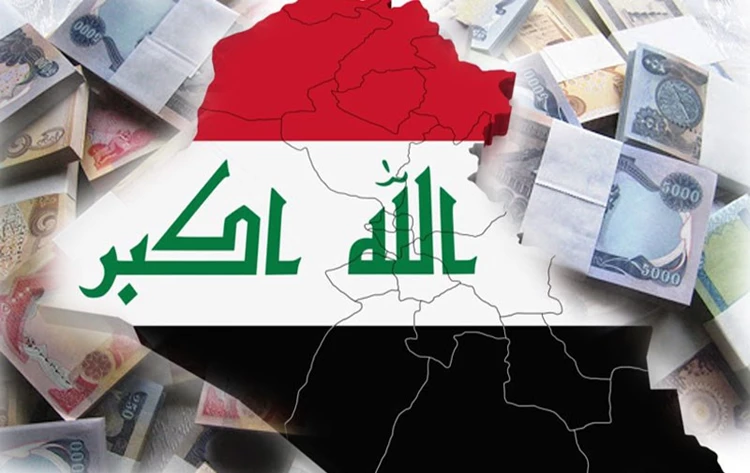
Concerns are growing over Iraq’s financial situation as politicians and economic experts warn that the state treasury is struggling to cover public expenses and salaries, pushing the government toward difficult financial choices.
Former Iraqi lawmaker Yasser Al-Husseini said the new government urgently needs solutions to address the current financial crisis, especially as traditional borrowing options are no longer effective.
Al-Husseini explained that the financial file has become the biggest challenge facing the government at this stage, stressing the need for quick action to maintain stability in Iraq.
He also suggested that the government could seek loans from friendly countries instead of turning to the World Bank, arguing that Parliament could approve such a move in order to avoid deeper financial pressure tied to international lending conditions.
Meanwhile, former MP Bassem Al-Gharibawi warned that taking on more debt could create serious long-term consequences for the country.
He said additional external borrowing would increase financial burdens through interest payments and place pressure on future generations. According to Al-Gharibawi, the government should instead focus on reducing public spending, limiting debt expansion, and finding alternatives to oil revenues.
He added that Iraq’s financial crisis is not only linked to recent tensions in the Strait of Hormuz, but is the result of years of weak planning, lack of strategy, and the absence of lasting economic solutions.
Al-Gharibawi also criticized the new government program, saying it does not contain effective measures to solve the country’s financial and economic problems. He warned that raising the dollar exchange rate to deal with the crisis could push Iraq into a more dangerous economic situation.
In a related statement, economist Nabil Al-Ali said the government is currently relying on printing currency to secure salaries and cover spending under the borrowing law.
According to Al-Ali, continuing this policy could place the Central Bank of Iraq under serious pressure and may eventually force the depletion of central reserves to cover financial gaps.
He stressed that the Central Bank must withdraw printed currency from circulation once it is no longer needed and either destroy or store it rather than recycle it into the market.
Al-Ali said this step is necessary to protect exchange rate stability and prevent inflation that could weaken citizens’ purchasing power.