Iraq’s public debt remains within safe and manageable levels by international standards, according to Prime Minister’s financial advisor Mazhar Mohammed Salih, who also outlined government plans to significantly reduce the country’s dependence on oil revenues over the next decade.
Speaking on Friday, Salih said that public debt should not be assessed using a single indicator, such as the ratio of debt to government revenues. Instead, he explained that international financial institutions evaluate several factors, including debt-to-GDP levels, debt servicing costs, and a country’s ability to generate sustainable income.
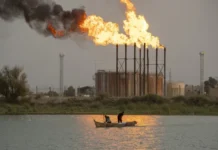
According to Salih, the majority of Iraq’s public debt is domestic debt, while external debt has declined in recent years. He noted that the country’s main economic challenge is not the size of the debt itself but the heavy reliance on oil revenues, which leaves public finances vulnerable to fluctuations in global oil prices.
He explained that when oil prices fall, government revenues decline, causing debt-related indicators to worsen even if the actual level of debt remains largely unchanged.
Salih stated that Iraq’s external debt obligations due through 2028 amount to less than $9 billion. When combined with domestic debt, total public debt currently represents about 36% of Iraq’s gross domestic product (GDP), a level he described as well below the international threshold often considered risky, which is generally above 60% of GDP.
He also pointed to the possibility of further reducing Iraq’s debt burden through the settlement of outstanding obligations related to the 2004 Paris Club agreement. These obligations involve approximately eight countries, including several Gulf states. Salih said that completing these settlements could result in the cancellation of at least 80% of the remaining amounts owed, and potentially more.
On domestic debt, Salih revealed that Iraq’s internal obligations have exceeded 100 trillion Iraqi dinars, equivalent to roughly $80 billion. Despite the large figure, he said domestic debt poses less risk to financial independence than excessive external borrowing, particularly since Iraq’s foreign debt obligations remain relatively limited.
At the same time, he warned that continued budget deficits and reliance on borrowing—especially during periods of lower oil prices—could reduce the government’s financial flexibility and increase the need for economic reforms.
Salih noted that the International Monetary Fund has repeatedly identified Iraq’s fiscal deficit and dependence on oil as the country’s primary economic challenges rather than the overall size of its debt.
To address these concerns, the government is pursuing a long-term strategy to increase non-oil revenues. The goal is to raise the contribution of non-oil income from less than 10% of total public revenues today to approximately 45% within the next ten years.
According to Salih, achieving this objective will require a range of reforms, including improving tax and customs collection, digitizing financial systems, expanding the tax base, encouraging private-sector growth and investment, and modernizing the banking sector.
He emphasized that these reforms will take time to produce full results but described them as the most sustainable way to strengthen public finances, reduce dependence on oil, improve liquidity, and enhance Iraq’s ability to withstand external economic shocks.
Salih also highlighted the existence of significant government arrears owed to contractors, farmers, and private-sector entities. These unpaid obligations are currently classified as arrears, but he noted that if they cannot be settled in a timely manner, they may eventually be converted into formal domestic debt to ensure proper repayment and financial management.
Overall, Salih stressed that Iraq’s debt remains manageable, but long-term economic stability will depend on controlling budget deficits, diversifying revenue sources, and continuing structural reforms across the economy.