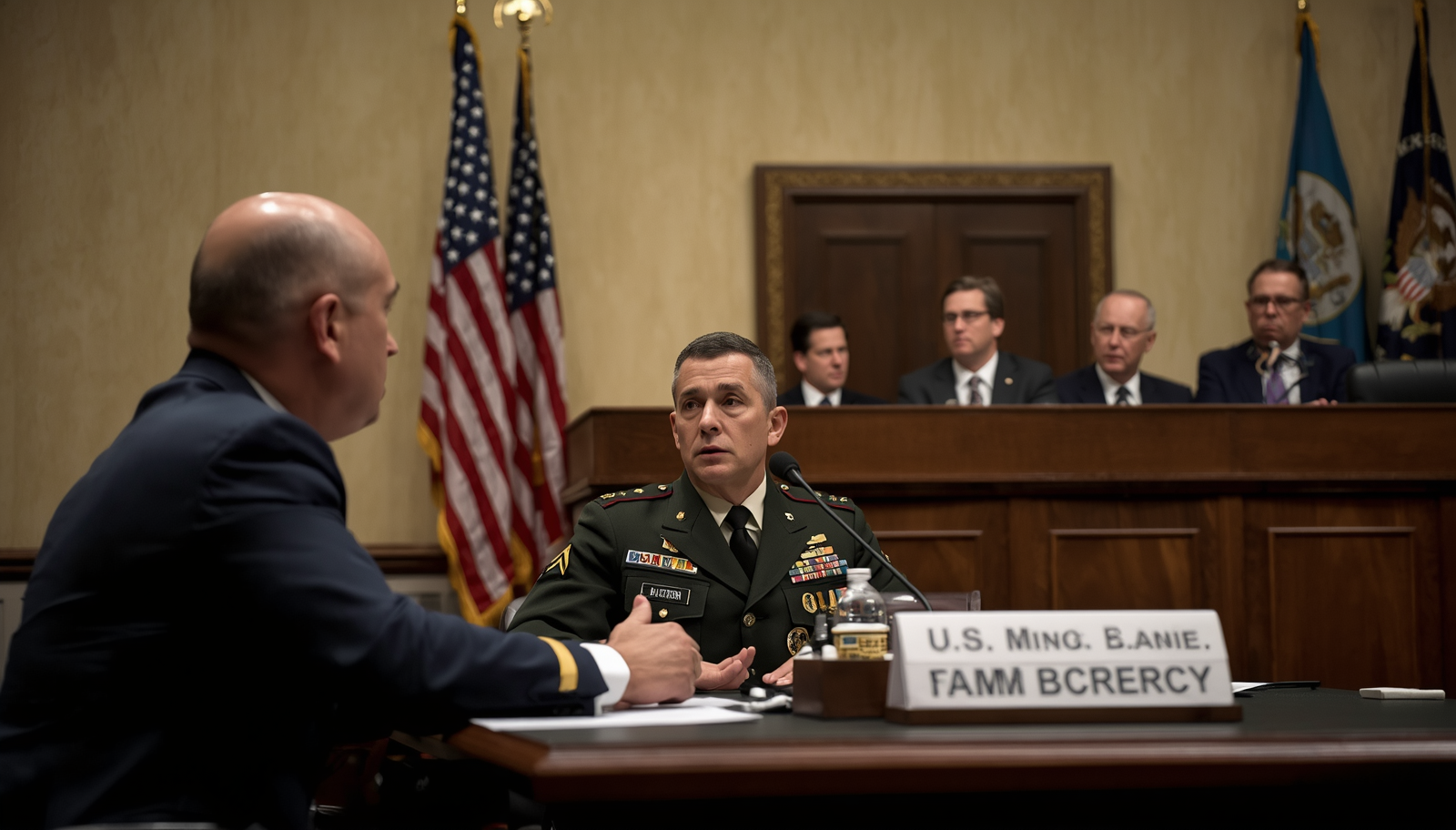
A senior U.S. military commander is making a broader case for Bitcoin — not just as money, but as a cybersecurity tool.
At a Senate hearing, Admiral Samuel Paparo said Bitcoin’s value goes beyond finance and could have uses tied to national defense and cyber resilience.
His main point was about proof-of-work — the security system behind Bitcoin.
In simple terms, he argued that Bitcoin’s design makes attacks expensive and difficult, which is exactly what strong cybersecurity aims to do.
His comment was that proof-of-work “imposes more cost” on attackers. That matters in cyber conflict, where raising the cost of attacks can be a form of defense.
He framed Bitcoin less as a currency and more as a computer science tool.
That idea echoes arguments made by Jason Lowery, who has said proof-of-work could help secure not just money, but data, communications, and even command systems in conflict scenarios.
The discussion came during a Senate Armed Services hearing focused on Indo-Pacific security, cyber threats, and risks tied to state-linked actors, including concerns involving North Korea.
That context matters.
This wasn’t a hearing about crypto investing. It was a hearing about national security — and Bitcoin came up as part of that conversation.
Paparo also called Bitcoin a “zero trust” peer-to-peer system, suggesting its architecture aligns with security principles the military already values.
Lawmakers also raised another angle: mining infrastructure.
Some in Washington are worried too much Bitcoin mining hardware comes from abroad, especially through foreign supply chains. That’s part of why senators including Cynthia Lummis and Bill Cassidy have backed the proposed “Mined in America Act,” which would support domestic mining equipment production.
So this conversation is moving beyond “Should governments hold Bitcoin?”
It’s becoming: Could Bitcoin’s infrastructure itself have strategic value?
That doesn’t mean the military is about to run on Bitcoin. But it does show the debate is expanding.
In simple terms, the argument is this:
- Bitcoin may be more than a financial asset
- its security model could have defense applications
- and governments are starting to discuss that more openly.