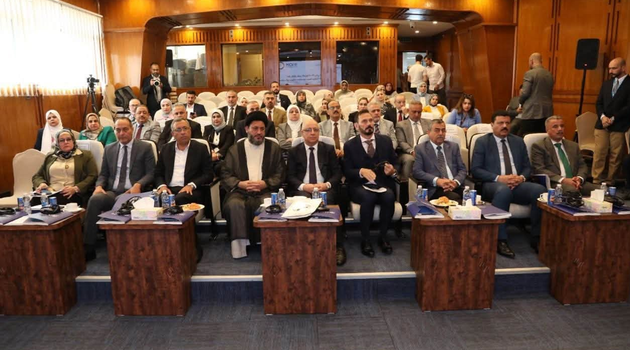
Iraq’s Ministry of Planning, in cooperation with the International Organization for Migration (IOM), has launched a new report examining population distribution across the country and its impact on development and stability.
The report, titled “Migration Challenges and Inequality: Towards a Balanced Map for Development and Stability,” analyzes how population distribution is linked to the availability of services, economic opportunities, and development projects in Iraq’s governorates. The study is based on data collected through the national population and housing census.
During the launch event, Dr. Maher Hammad Johan, Under-Secretary for Technical Affairs at the Ministry of Planning, said the report is part of Iraq’s commitments under the Arab Council for Population and Development. He stressed that its findings are intended to support future planning and policymaking, expressing hope that the recommendations will be turned into practical measures through cooperation among government institutions, local authorities, and international partners.
Pascal Rendjens, Head of the IOM Mission in Iraq, emphasized that migration, poverty, and development are closely connected. He noted that more than 60% of Iraq’s population is of working age, creating a significant opportunity for economic growth if investments are made in skills development, job creation, and fair access to services across all regions.
The event also featured a presentation by Dr. Maha Abdul-Karim Hammoud, Director General of the Department of Human Development at the Ministry of Planning, who outlined the report’s key findings and recommendations aimed at promoting balanced development and reducing regional inequalities throughout Iraq.