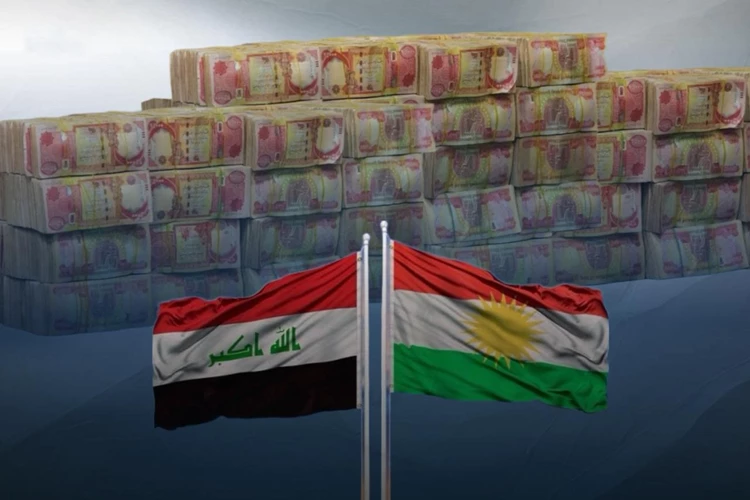
A growing political dispute has emerged over the Kurdistan Region’s share of Iraq’s federal budget, with accusations that inaccurate employee and population data have been used for years to secure larger financial allocations.
Former Parliamentary Finance Committee member Abdul Hadi al-Saadawi said the Kurdistan Regional Government has repeatedly submitted inaccurate figures regarding employee numbers and population percentages used in budget calculations. According to him, the data provided by the region does not accurately reflect its actual population size.
Al-Saadawi called for a comprehensive audit by the Federal Board of Supreme Audit of all employee records in Kurdistan’s ministries, as well as those in other Iraqi provinces. He said all records should be linked to a unified federal system to ensure transparency, finalize budget allocations, and remove any uncertainty surrounding employee numbers.
He also stressed that investment budget allocations should be discussed separately, noting that Kurdistan receives its share according to percentages specified by law after oil revenues are transferred to Baghdad.
Meanwhile, independent Kurdish politician Haval Didar made more serious allegations, claiming that corruption and political influence have prevented proper oversight of financial records in the region. He alleged that some audit efforts have been compromised and that influential political figures maintain control over government records, making investigations difficult.
Didar further claimed that the number of active civilian employees in the Kurdistan Region is around 382,000, while a large number of alleged “ghost employees” and other names continue to receive salaries from the public budget. These claims have not been independently verified.
The debate intensified after Kurdistan Regional Government spokesperson Peshwa Hawrami stated that the region’s fair share of the federal budget should be 14% rather than the current 12.67%. He argued that the existing percentage does not reflect the results of Iraq’s recent population census.
Hawrami called for discussions between the Kurdistan Regional Government and Iraq’s Ministry of Planning to review the census results and determine the region’s appropriate share of the federal budget.
The disagreement highlights continuing tensions between Baghdad and Erbil over budget allocations, employee payrolls, oil revenues, and financial transparency. With both sides presenting different figures and interpretations, the issue is expected to remain a major political and financial challenge in the coming months.