Beijing is hosting the world’s biggest auto show this Friday, and it is shaping up to be a major showcase of how fast China’s car industry has changed.
Hundreds of thousands of visitors are expected as Auto China opens across two huge venues in the capital, covering around 380,000 square meters — bigger than 50 football fields.
The event runs from April 28 to May 3, with the first days reserved for industry and media before opening to the public.
Summary
The Beijing Auto Show features over 1,400 vehicles from global and Chinese carmakers.
Chinese EV brands like BYD, Xiaomi, and Xpeng are now leading in electric and smart driving tech.
Traditional giants like Volkswagen, Toyota, and BMW are losing ground in China’s EV market.
Chinese EV Makers Take the Lead
The biggest story this year is how much power domestic brands now hold.
Companies like BYD, Xiaomi, and Xpeng are no longer just competing — they are setting the pace. They are pushing new tech in AI driving systems, autonomous features, and faster charging batteries.
Xpeng said it will even showcase robotics and flying car technology, along with a new smart driving system, highlighting how far the competition has moved beyond traditional cars.
Global Brands Try to Catch Up
Foreign automakers once dominated China’s auto market, but that has changed quickly.
Brands like Volkswagen, Toyota, and BMW are now working more closely with Chinese tech companies to stay competitive.
BMW is partnering with battery giant CATL, Audi is using Huawei’s driving systems, and Volkswagen is co-developing EVs with Xpeng.
Instead of leading alone, global companies are now relying on local innovation to keep up.
Fierce Competition and Price Pressure
China’s EV market is extremely competitive, and price wars have become common.
Companies are offering big discounts and trade-in deals to attract buyers, pushing officials to warn about excessive price competition and call for better regulation.
At the same time, new EV brands continue to appear, with at least eight new players entering the market in just the past two years.
The focus is now shifting from just selling cars to winning long-term customers through upgrades, comfort, and smart features — especially in the SUV segment.
EVs, Range, and Real-World Use
Electric cars are also getting a boost from rising global oil prices, which are pushing more drivers toward EVs.
One key battleground is driving range.
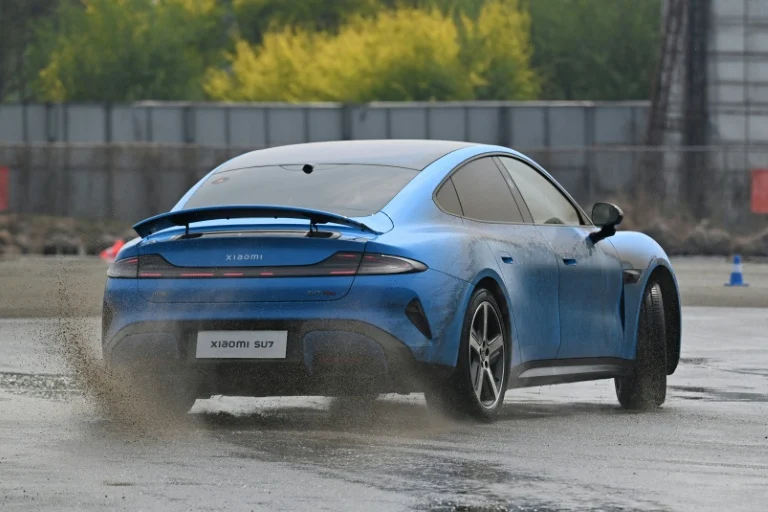
Xiaomi’s CEO recently made headlines after driving its SU7 Pro electric sedan 1,300 km from Beijing to Shanghai, stopping only once to charge during the 15-hour trip.
That kind of real-world performance is becoming a major selling point as companies compete not just on price, but on how practical EVs are for everyday life.
Overall, this year’s Beijing Auto Show highlights one clear shift: China is no longer just a big car market — it is now the center of global EV innovation and competition.