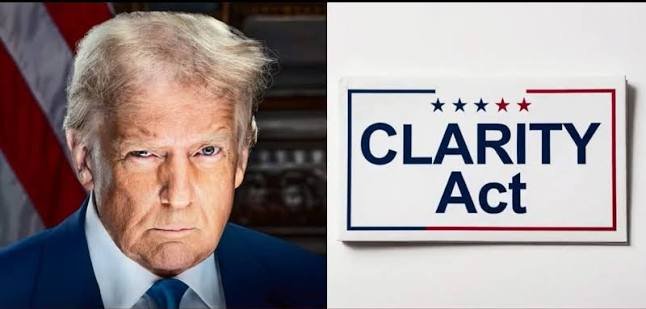
Former U.S. Defense Secretary Mark Esper is urging the Senate to move forward with the CLARITY Act, saying that clear crypto rules are not just about finance—they are also important for U.S. national security.
Esper believes that regulated crypto markets in the United States would give authorities better visibility into digital asset transactions and help law enforcement track illegal activity. He argues that when crypto companies and users operate through offshore platforms with weaker oversight, it becomes harder for U.S. agencies to monitor financial activity and enforce sanctions.
The push comes ahead of a key Senate vote scheduled for Sept. 15. Lawmakers will vote on cloture, a procedural step that requires 60 votes to move the bill forward. If the vote succeeds, the Senate can begin formal debate on the legislation, propose amendments, and eventually hold a final vote.
The House of Representatives already approved the CLARITY Act with a strong 294-134 vote in July 2025. The Senate Banking Committee later advanced its own version of the bill, but the legislation still faces challenges in the Senate, where bipartisan support is needed.
If passed, the bill would divide oversight of digital assets between the Commodity Futures Trading Commission (CFTC) and the Securities and Exchange Commission (SEC). In simple terms, some digital assets would be treated as commodities under the CFTC, while others would remain under SEC supervision as securities. Supporters say this would finally provide a clearer regulatory framework for the crypto industry.
Esper also tied the issue to global competition. He warned that delays in creating crypto regulations could give countries like China more time to develop payment systems that operate outside U.S. influence. According to him, maintaining clear oversight of digital asset markets helps protect the role of the U.S. dollar and supports sanctions enforcement.
He pointed to threats from sanctioned groups and North Korean cyber organizations, arguing that a regulated U.S. crypto market would make it easier for authorities to access transaction records and investigate suspicious activity.
Despite those arguments, major disagreements remain. Lawmakers are still debating issues such as stablecoin rewards, decentralized finance regulations, and ethics rules for public officials who hold digital assets. These disputes have slowed progress and continue to divide both lawmakers and industry participants.
Banks have pushed for stricter limits on interest-like rewards offered by stablecoin companies, while crypto firms argue that overly restrictive rules could drive users toward less regulated platforms. Questions around how decentralized finance projects should be classified have also become a sticking point in negotiations.
The uncertainty has affected expectations for the bill’s chances. Prediction market traders have lowered their outlook for passage as policy disagreements and limited Senate time continue to create obstacles.
Meanwhile, CFTC Chair Michael Selig has said that his agency can continue working on crypto-related regulations under its existing authority even if Congress does not pass the CLARITY Act. However, he noted that broader oversight of spot crypto markets would still require new legislation from Congress.
With the Sept. 15 vote approaching, the CLARITY Act remains one of the most closely watched crypto bills in Washington. Supporters see it as a way to provide regulatory certainty, strengthen oversight, and keep the United States competitive in the rapidly growing digital asset industry.