An Economist Confirms The Possibility Of Resorting To The Central Bank’s Reserves To Compensate For The Deficit.
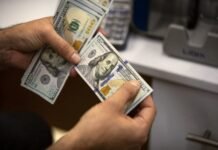
Baghdad… Economic expert Dr. Safwan Qusay confirmed the possibility of resorting to the Central Bank of Iraq’s cash reserves, which exceed $90 billion, while simultaneously warning of the potential for inflation within Iraq.
Qusay told Al-Maalouma, “The Central Bank of Iraq’s reserves amount to $90 billion, in addition to 170 tons of gold. If borrowing from these reserves is adopted, it is possible to maintain financial flexibility down to $60 billion.”
He added, “The $60 billion represents the value of the issued Iraqi dinar, but a decrease in the dinar’s value below this financial backing would allow for domestic inflation.”
**********************************
He indicated that “the possibility of resorting to borrowing from the Central Bank’s reserves, or the aforementioned inflation, could occur six months after this May, as the government can secure salaries for this period.” End 25N
Al-Hilali Reveals Details Of The US Deadline For Al-Zidi’s Government: Six Months For Evaluation And Another To Decide On Support
latest news Saturday, May 16, 2026 Baghdad – One News The Arabic 21 website quoted former Prime Minister’s advisor Ayed Al-Hilali as saying that Prime Minister Ali Al-Zaidi is required to make very significant changes in order to implement what he described as the United States’ conditions.
Al-Hilali explained that Washington gave Al-Zaidi an initial six-month grace period to assess the performance of his government, followed by a similar extension before making a decision on whether to continue supporting him or abandon him.
He added that American officials, including Ambassador Tom Barrack, expressed a clear desire to deal with Al-Zaidi’s government, noting that American support would not be free, but rather linked to the existence of a political and executive quid pro quo for this support. https://1news-iq.net/الهلالي-يكشف-تفاصيل-المهلة-الأمريكية/
A Member Of The Parliamentary Finance Committee Told NINA: “The Next Stage Will Be Very Difficult… Economically.”
Saturday, May 16, 2026 08:49 | Economy Baghdad / NINA / Member of the Parliamentary Finance Committee, MP Mustafa al-Karawi, affirmed that Iraq is facing a very difficult economic phase, attributing this to the widening budget deficit, low revenues, and the failure to find alternatives to oil to finance the country’s economy.
Al-Karawi told the Iraqi National News Agency ( NINA 😞 “Following the economic crisis that occurred in the region due to the Iran-US war and the previous Iraqi government’s inability to find solutions for oil exports, the budget deficit and low revenues have widened due to the failure to find alternatives to oil by increasing non-oil revenues.”
The Finance Committee member emphasized: “The coming period will be very difficult due to the lack of non-oil funding sources, as non-oil revenues constitute only 10% of total revenues. This will significantly impact the revenue generated and its direct dependence on external regional conditions.” He explained: “The continuation of this situation will greatly affect the provision of services and the implementation of investment projects due to the lack of financial liquidity.”
He expressed his hope that the new government would find real solutions to build a strong domestic economy and establish systems to effectively manage non-oil revenues, significantly reducing dependence on oil. https://ninanews.com/Website/News/Details?key=1295740
******************************
Government Advisor: The Budget Is Going Through A Complex Funding Crisis And Salaries Are A “Sacred Issue”
Exclusive to Alsumaria 2026-05-16 | 13:07 The economic and financial advisor to the Prime Minister said, Mazhar Muhammad Salih On Saturday, he said the general budget is facing a major crisis as a result of funding disruptions, attributing this to what he described as the shock of the shutdown. Strait of Hormuz Against the backdrop of tensions betweenIranAnd the United States, which was reflected in the smooth and proper delivery of about 90% of the budget resources.
Saleh stated in an interview with Alsumaria News He noted that “short-term measures are being worked on,” indicating that there is significant coordination and cooperation between fiscal and monetary policies to ensure the continued functioning of the government and the fulfillment of essential obligations.
He explained that “the ongoing war is short-term in nature, and that government efforts are currently focused on overcoming this phase and mitigating its economic impact.”
The advisor emphasized that the issue of salaries is a “sacred matter” affecting the lives of approximately 9 million employees and nearly 40 million citizens, noting that each salary supports an entire family, and that in a rentier state like Iraq Not possible Acceptance Any discussion about compromising it is unacceptable, as it is at the forefront of government priorities.
Kujer To Nina: Iraq Is The Biggest Economically Affected By The US-Iran War
Saturday, May 16, 2026 09:38 | Economy Baghdad/ NINA / Jamal Kojar, a member of the Parliamentary Finance Committee, affirmed that Iraq is the country most economically affected by the regional Iranian-American conflict. He explained that most capital has fled Iraq due to the unstable security and military situation.
In a statement to the Iraqi National News Agency ( NINA ), Kojar said, “The security and regional situation has direct and indirect effects on the Iraqi economy in several aspects. The first, main, and most impactful aspect is the oil sector, as oil production has decreased by at least three-quarters, and the oil being sold now costs more than before the war.”
He added, “The second affected sector is trade, especially border crossings, as maritime traffic has been significantly impacted and complicated. The third affected sector is investment, which is experiencing near-paralysis.”
Kujer continued: “The fourth aspect affected was foreign capital. After this battle and the attempts to drag Iraq into the Iran-US war, much capital fled the country, and investments were withdrawn. The fifth aspect that impacted the economy and financial situation was the measures accompanying the military operation, such as the cessation of liquidity and foreign currency support, and a long list of other effects left by the war in the region, making Iraq the most economically damaged country.” /End 8. https://ninanews.com/Website/News/Details?key=1295749
************************************
An Iraqi Observatory Presents Three Options To The Al-Zaidi Government To Address The Financial Crisis.
Energy and Business breaking 2026-05-16 Shafaq News – Baghdad On Saturday, the “Eco Iraq” economic observatory presented three options to the government of Prime Minister Ali Faleh al-Zaidi to confront the financial crisis.
The observatory said in a statement received by Shafaq News Agency that “the Strait of Hormuz crisis has significantly affected Iraq’s financial revenues, in addition to a pre-existing financial deficit and an increase in the size of the internal debt.”
He added that “there are three main options before the new government headed by Ali al-Zaidi to address the crisis, the first of which is internal borrowing.”
The observatory explained that “domestic borrowing is done through the issuance of bonds or treasury bills by the Ministry of Finance, which are purchased by the Central Bank of Iraq, in exchange for providing financial liquidity to the government at specific interest rates.”
He pointed out that “the previous government adopted this option during the past years, which contributed to the decline of the official reserve to about 125.6 trillion Iraqi dinars.”
The observatory explained that “the second option is to adjust the exchange rate of the Iraqi dinar to 150,000 dinars per 100 dollars, instead of 132,000 dinars, with the aim of increasing government revenues in dinars and reducing the financial deficit.”
He explained that “this option was previously used during the government of former Prime Minister Mustafa Al-Kadhimi following the financial crisis and the drop in oil prices, with the possibility of restoring the exchange rate to previous levels if oil and financial revenues improve.”
The observatory concluded its statement by saying, “The third option is to resort to external borrowing, as happened during Haider al-Abadi’s government, where some international loans were linked to reform measures and financial and economic conditions related to public spending, employment and fiscal policies.”
A source close to the International Monetary Fund revealed on Thursday that Iraq is seeking financial support from the Fund as a result of the consequences of the war in the Middle East, which has affected the flow of oil and energy supplies from producing countries. https://www.shafaq.com/ar