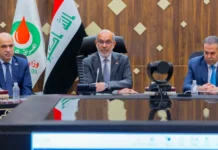
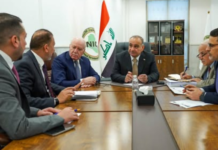
Ali Faleh al-Zaidi chaired the first regular session of the new Iraqi Council of Ministers on Saturday, issuing a broad set of directives aimed at shaping the government’s priorities in areas including the economy, public services, governance, and anti-corruption.
According to a statement from the Prime Minister’s media office, ministers presented briefings on the conditions of their ministries and the main challenges facing their sectors.
Following the discussions, Al-Zaidi announced a framework of instructions designed to guide government policy during the coming period.
Among the key directives, the prime minister ordered all ministers to complete financial disclosure forms within one week.
He also imposed a freeze on staffing changes and restructuring within ministries.
Each ministry was instructed to prepare a list of priorities within 30 working days so they can be included in the government’s official program.
Al-Zaidi directed the Ministry of Oil to focus on increasing the value of Iraq’s oil sector by expanding production and exports rather than relying only on crude oil sales.
The Ministry of Electricity was tasked with preparing two separate plans: one for immediate electricity solutions ahead of the summer season and another focused on long-term development of the national power grid.
The Ministry of Health was instructed to activate the country’s health insurance law.
Meanwhile, the Ministry of Foreign Affairs was ordered to prepare briefing papers aimed at restoring and strengthening Iraq’s relations with Arab, regional, and international partners.
Al-Zaidi also stressed the importance of accelerating work on the Development Road Project and integrating Iraq into global trade networks.
Other directives included launching a single-window system to simplify procedures for investors, expanding digitalization and automation across government institutions, and strengthening cooperation with the Federal Integrity Commission to recover smuggled Iraqi funds held abroad.
The prime minister additionally announced the creation of a Financial Stability Council and called for the development of a comprehensive national economic policy aimed at supporting long-term financial stability in Iraq.