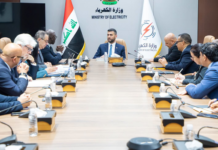
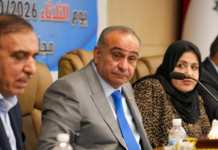
Iraq’s long-delayed oil and gas law remains unresolved after years of political and technical disagreements in parliament. The law is important because it would establish clearer rules for managing the country’s oil and gas resources and distributing revenues between the federal government, the Kurdistan Region, and the provinces.
Firas al-Muslawi, spokesperson for the Reconstruction and Development parliamentary bloc, said the oil and gas law is among the laws that have been postponed repeatedly by parliament, including during the previous parliamentary session. He said both political and technical disagreements have prevented its approval and suggested that reaching a final agreement could still take time.
According to al-Muslawi, one of the main political obstacles is opposition from the Kurdistan Region and Kurdish parliamentary blocs. He said the law is nevertheless important for Iraq because it could help create clearer rules for distributing national wealth among the provinces.
The main disagreements between Baghdad and the Kurdistan Region involve the management of oil fields, control of revenues, and the constitutional powers of the federal and regional authorities. Resolving these issues would be necessary before the law can move forward.
MP and former minister Zuhair al-Jalabi also discussed the issue of disputed land between Nineveh Governorate and the Kurdistan Region. He said the administrative boundaries of the provinces are formally defined by the Ministry of Planning and cannot be changed without a parliamentary decision and approval of a new administrative map.
Al-Jalabi said the oil and gas law faces broader challenges, including disagreements over shared territories and ownership of oil fields. He also claimed that some countries benefit from continued oil smuggling and corruption and therefore have an interest in preventing the law from being approved. These claims were presented as his assessment and were not independently established in the report.
For now, parliament and the relevant authorities continue to discuss how to produce a version of the law that can gain wider political support. The unresolved legislation remains closely connected to Iraq’s management of its oil wealth, the distribution of revenues, and the relationship between Baghdad and the regions and provinces.