Tishwash: The US Treasury lifts restrictions on a number of Iraqi exchange companies – Breaking News
The US Treasury lifts restrictions on Iraqi exchange companies
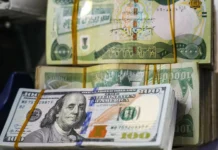
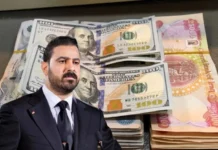
The US Treasury Department has lifted restrictions on a number of Iraqi exchange companies, after verifying that they meet the compliance standards approved by the Central Bank of Iraq, allowing them to return to participating in dollar sales to travelers.
This step comes as part of strengthening compliance with regulatory controls and organizing foreign currency sales operations in accordance with approved frameworks. link
Tishwash: Licensed banks under pressure from the Central Bank: 4 days to complete foreign transfers – Urgent
The Central Bank of Iraq directed licensed banks on Sunday to complete foreign transfer operations within a maximum period of four days, warning of punitive measures against banks that exceed the specified deadline.
A source told Baghdad Today that the Central Bank sent a strongly worded letter to all licensed banks, stressing the need to adhere to the specified timeframe for completing any banking transaction related to foreign transfers, and confirming that banks that violate this will face the prescribed penalties.
The source added that the directive comes in support of import operations, and within the framework of the Central Bank’s efforts to reduce speculation and control the parallel currency market. link
************
Tishwash: Swift credits reach local banks, but traders are stuck between two exchange rates – Urgent
The SWIFT transfers of foreign credits arrived at the local banks on Sunday, but the local banks are still refraining from releasing them to traders and importers, amid uncertainty about the approved exchange rate.
A source told Baghdad Today that private banks attribute their refusal to the lack of clarity regarding the final pricing from the Central Bank, and whether the dollar price will be calculated on the basis of 132,000 or 152,000 dinars per 100 dollars.
He added that the Central Bank of Iraq noted, in a letter dated October 7, the adoption of the previous exchange rate for amounts deposited before the change in the dollar exchange rate.
The source pointed out that the delay in launching the SWIFTs and the ambiguity regarding the exchange rate coincided with a noticeable rise in the dollar prices in the parallel market.
(The right of reply is guaranteed to private banks and to anyone whose name or title was mentioned) link
************
Tishwash: An expert reveals the reason behind the paralysis of wholesale markets and speculators’ manipulation of the dollar.
Economic and banking expert Diaa Mohsen attributed the paralysis and stagnation plaguing wholesale markets and the reluctance of merchants to sell their goods to the “vague” and unclear policies pursued by the Central Bank of Iraq. He emphasized that these measures have left the parallel market in a state of constant fluctuation.
Mohsen told the Information Agency, “The refusal of wholesalers to sell their goods has caused a shortage of basic commodities in the markets, which has automatically led to a new surge in the prices of goods and commodities, with the ordinary citizen being the sole victim of this chaos.”
He added, “The Central Bank injects hundreds of millions of dollars daily, but most of it goes as foreign transfers, while what is injected into the local and cash market does not exceed $3 million.” He pointed out that “this cash shortage has opened the door wide for speculators in the parallel market to manipulate exchange rates and impose their sales outside the official rate.”
Mohsen explained that “this ineffective mechanism has eroded the confidence of both merchants and citizens in the central bank’s monetary policy, leaving markets hostage to rumors and daily speculation. link
************
Tishwash: The Central Bank of Iraq introduces a new electronic system for replacing damaged currency.
The Central Bank of Iraq announced on Sunday the introduction of a new electronic system for replacing damaged currency, as part of its efforts to simplify procedures and make it easier for citizens to access this service more quickly and efficiently.
The bank explained in an official statement that the system allows citizens to submit requests to replace damaged currency electronically via the “Aur” platform, by entering and confirming the required data, and the competent authorities in the Central Bank of Iraq will complete the necessary procedures to complete the replacement process.
The statement affirmed that the introduction of the system comes within the Central Bank of Iraq’s directions towards digital transformation and the development of services provided to citizens, which contributes to simplifying procedures, reducing time and effort, and raising the efficiency of banking services provided to the public.
The statement noted that citizens wishing to benefit from the service can submit their applications through the “Our” electronic platform via the link: https://currency.app.cbi.iq .
The bank also made it possible to view the details of the “Instructions for Replacing Damaged Currency” through its official website via the following link:
Tishwash: Washington renews its support for al-Zaidi’s “vision” despite the controversy surrounding the government formation.
The US administration has reaffirmed its support for Iraqi Prime Minister Ali al-Zaidi in achieving his vision, despite criticisms regarding the completion of the government formation, particularly concerning the position of deputy prime minister, which was obtained by Asaib Ahl al-Haq, according to Voice of America radio .
The American radio station reported, in a report translated by Shafaq News Agency, that the completion of al-Zaidi’s government formation has revived concerns about the continued influence of Iranian-backed groups, but some political observers believe that these appointments may give al-Zaidi an opportunity to strengthen his authority and gradually bring the armed factions under government control.
Despite these concerns, Voice of America explained that the United States reaffirmed its support for al-Zaidi, stressing the importance of Iraq’s sovereignty and limiting the influence of Iranian-backed armed groups.
The radio station quoted a spokesman for the US State Department as saying that US President Donald Trump, “as he made clear when he hosted Prime Minister al-Zaidi for his historic visit on July 14, strongly supports his vision to ensure a brighter future for all Iraqis.”
The spokesman added that “Washington’s goal remains a sovereign Iraq, capable of preventing attacks launched from its territory and maintaining strong relations with the United States.”
He added that “Iran is an unreliable actor with a long history of using Iraqi militias to steal resources from the Iraqi people and threaten Iraq’s sovereignty,”noting that “American efforts to promote regional stability focus on supporting national sovereignty and economic prosperity.”
The report noted that the discussions regarding the new appointments reflect differing assessments of whether the political forces allied with Iran will strengthen their influence within the Iraqi government, or whether these appointments will give al-Zaydi a wider political space to limit their influence.
The American radio station noted that the House of Representatives approved the new appointments, which included Nayef al-Shammari as Minister of Defense, Yasser al-Maliki as Minister of the Interior, and Laith al-Khazali as Deputy Prime Minister, pointing out that the latter is a prominent leader in Asaib Ahl al-Haq, which the United States designated as a terrorist organization in 2020, and also listed the brothers Laith and Qais al-Khazali on global terrorism lists.
The report was based on a blog post by Republican Representative Joe Wilson, in which he criticized the appointment of Khazali to the government, describing him as “no better than ISIS, and possibly worse.”
Meanwhile, former US diplomat Joey Hood said the Trump administration might be willing to give al-Zaidi more flexibility in dealing with Iranian-backed militias, rather than opposing political arrangements that allow some of their leaders to assume government positions.
According to the report, Hood explained that Trump and his special envoy to Iraq, Tom Barrack, seem to prefer an approach focused on economic partnerships, rather than military operations or direct intervention in political decisions in Baghdad.
He added that “they do not seem to be concerned with the fine-tuning of how the prime minister can gain the upper hand over Iranian-backed militias, unlike some previous US administrations,” noting that Washington may adopt a wait-and-see approach, allowing al-Zaidi to use figures like al-Khazali to control the less cooperative armed factions.
According to the American politician, if al-Zaidi succeeds in employing al-Khazali and others to put pressure on uncooperative groups, “he will have found an Iraqi solution to this problem.”
But Hood warned that the ultimate test of al-Zaidi’s strategy is his ability to prevent Iranian-backed groups from continuing to exploit Iraqis, influence political decisions, and launch attacks against Iraqis and neighboring countries.
According to the report, the expansion of the cabinet, in addition to the controversy over Iranian influence, sparked criticism regarding the creation of new government positions to accommodate competing political forces, at the expense of public finances, which was objected to by MPs before the session convened.
The report quoted Baghdad-based academic and political researcher Ghalib al-Daami as saying that many Iraqis oppose the creation of new ministries and senior government positions, explaining that expectations were instead for merging some ministries and abolishing other institutions, with the aim of simplifying bureaucratic procedures and reducing pressure on the general budget link