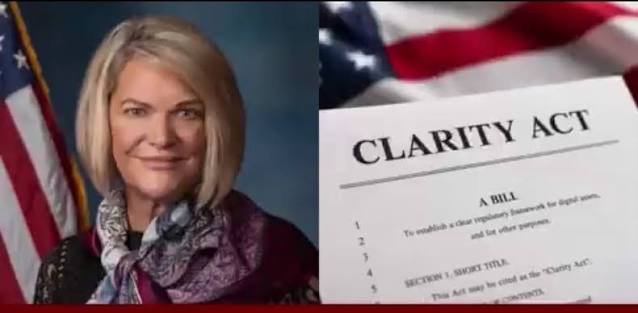
Former U.S. Defense Secretary Mark Esper has called on the Senate to pass the CLARITY Act, arguing that the legislation should be viewed not only as a financial regulation bill but also as a matter of national security.
In a recent opinion article, Esper said clearer rules for digital assets would help the United States strengthen oversight of the crypto industry, improve sanctions enforcement, and reduce the movement of crypto businesses to less-regulated jurisdictions.
He also warned about threats from foreign adversaries, pointing to North Korea’s cyber activities and China’s efforts to develop alternative payment systems outside traditional U.S.-influenced financial networks.
Esper argued that a stronger regulatory framework could help authorities better track illicit financial activity and protect the U.S. financial system from abuse.
His comments come as the CLARITY Act moves toward an important Senate vote. Senate Majority Leader John Thune has filed a procedural motion that sets up a key vote on September 15. The vote will determine whether the Senate moves forward with debating the legislation, although it will not be the final vote on the bill itself.
Supporters of the CLARITY Act say it would provide long-needed regulatory clarity for the cryptocurrency industry while also giving government agencies additional tools to combat money laundering and other financial crimes.
The latest version of the bill would expand the U.S. Treasury Department’s authority to impose restrictions on digital asset transfers linked to foreign jurisdictions or entities considered high-risk for money laundering activities.
The legislation also includes provisions related to illicit finance investigations, law enforcement training, and international cooperation aimed at combating financial crimes involving digital assets.
However, not everyone agrees with Esper’s position. Critics argue that some parts of the bill could weaken oversight in certain areas of the crypto industry or create challenges for law enforcement agencies trying to track illicit transactions.
Some lawmakers and law enforcement groups have raised concerns about how the legislation handles decentralized finance (DeFi), crypto mixers, and software developers who create blockchain-related tools.
As a result, the debate over the CLARITY Act remains ongoing, with supporters viewing it as a way to strengthen both innovation and national security, while opponents continue to question whether it provides enough safeguards.
The bill has already passed the House of Representatives and cleared the Senate Banking Committee with bipartisan support. Attention is now focused on the September 15 procedural vote, which will provide the next major indication of whether the legislation can continue advancing through the Senate.
While Esper’s support adds a prominent national security voice to the discussion, the future of the CLARITY Act will ultimately depend on whether lawmakers can build enough bipartisan backing to move the bill forward.