Iraq’s Import Trap: A System That Produces Demand, Not Supply
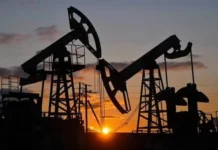
2026-05-01 Shafaq News Every day, above the oil fields of southern Iraq, gas burns off into the sky in towers of orange flame. Iraq flares 1,200 million standard cubic feet of gas per day —enough, if captured, to power the industries the country doesn’t have. Instead, Baghdad imports gas from Iran to generate electricity for the factories that cannot run without it.
It pays billions for the fuel it is simultaneously destroying. The ships that arrive at Umm Qasr carrying rice, sugar, and cooking oil are a symptom of the same logic: a country that possesses what it needs, and cannot stop paying others to provide it.
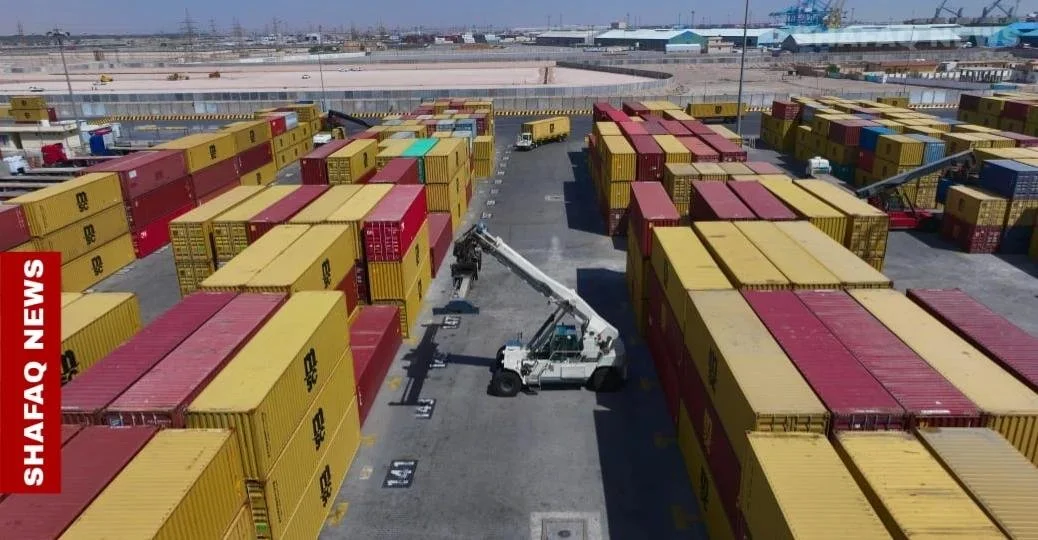
Iraq’s GDP stood at $279.6 billion in 2024, according to the World Bank. In that same year, oil accounted for 89% of the country’s foreign exchange earnings, with crude oil accounting for between 92 and 99% of total exports.
The country sits atop one of the largest hydrocarbon reserves on earth. And yet it cannot feed itself, power its factories reliably, or manufacture goods that compete on its own domestic market.
The standard explanation —weak institutions, post-war damage, incomplete reconstruction—describes symptoms while leaving the cause untouched. The more accurate account is this: the political economy that oil built in Iraq actively destroys the conditions under which domestic production could ever compete.
Every boom has deepened the dependency rather than reducing it, not by accident but by design, because the system that distributes oil revenues is also the system that governs, and it has no incentive to change.
$80 Billion in Imports
Iraq’s annual import bill exceeds $80–90 billion in goods, according to Iraqi Ministry of Planning estimates. That number is striking because of what it covers. Between 80 and 100% of many basic staples, including wheat, rice, and sugar.
The dependency on agricultural imports has been building since the mid-1960s, accelerating through each successive conflict, and never reversed during the periods of relative stability and high oil prices that should, theoretically, have enabled investment in domestic alternatives.
The USDA’s Foreign Agricultural Service documented what this looks like at ground level in its most recent grain reporting on Iraq. In one recent drought year, the planted area for paddy rice fell by 96% compared to the previous season, as the government restricted cultivation areas in the south due to water shortages. Iraq —a country bisected by the Tigris and Euphrates, ancient breadbasket of the Fertile Crescent— cannot reliably grow its own rice.
The gap between what Iraq consumes and what it produces is not a temporary problem awaiting the right infrastructure investment; it is the settled outcome of a structural transformation that oil revenue accelerated and that no government since 2003 has found either the tools or the political will to reverse.
Dutch Disease, Iraqi Edition
Economists have a precise term for what happened: Dutch disease describes the way a resource boom creates overreliance on one sector at the expense of others, operating through two channels: a resource movement effect, where labor migrates from manufacturing to the booming sector, causing direct deindustrialization; and a spending effect, where increased revenues raise demand for non-tradable goods, causing indirect deindustrialization. Iraq exhibits both channels in their most acute form.
Oil extraction accounts for 55% of Iraqi GDP; manufacturing, construction, water, and electricity combined account for 8%. Agriculture accounts for 4%. The tradable, productive sectors of the economy were not gradually outcompeted; they were crowded out by a state that, flushed with petrodollars, found it cheaper and politically easier to employ people directly than to build the conditions for a private economy.
Iraq’s labor force numbers around 15 million people, and approximately 42% work in the public sector, an outcome rooted in decades of state-centered economic policy, first institutionalized under the Ba’ath regime and later reinforced during the post-2003 reconstruction period.
The World Bank reported that the average Iraqi public employee generates 17 minutes of effective work per day. More than 10.5 million Iraqi citizens —approximately a quarter of the total population— receive a monthly salary from the state. Salary and pension obligations now exceed $48 billion annually, close to 40% of the federal budget, according to Iraq’s Federal Board of Supreme Audit.
Every dinar spent retaining a surplus civil servant is a dinar not spent on the power grid, the roads, or the credit facilities that would allow a private manufacturer to exist, let alone compete.
Factories That Cannot Run
Of all the structural obstacles facing Iraqi producers, none is more concrete or more consequential than electricity, and the way the country manages its own energy.
Iraq is the world’s second-largest gas-flaring country after Russia, burning 1,200 million standard cubic feet per day while simultaneously importing gas from Iran at a cost of billions of dollars annually, spending roughly $2.78 billion on Iranian gas in 2021 alone, and twice that the following year, according to the Washington Institute for Near East Policy. The fuel that could power Iraqi industry is instead lit on fire above the fields that produce it, while the state pays a neighbor for the replacement.
The supply gap this creates is severe, even before an acute outage in the summer season, Iraq generates around 24,000 megawatts, considerably less than the estimated 34,000 megawatts needed to meet local demand. The International Energy Agency projects the deficit will persist: even if all planned capacity additions are completed and transmission reforms implemented, Iraq will still face a shortage of approximately 10,000 megawatts over the next five years.
For a manufacturer, unreliable electricity is not an inconvenience; it is a structural cost that no tariff protection can offset. A factory running on backup diesel generators faces energy expenses far above those of competitors in Turkiye, Iran, or China, where power is stable and often subsidized. Iraqi producers are asked to compete internationally with one hand tied behind their back, and then told the problem is that their hand is weak.
The financial structure of the electricity sector ensures the crisis cannot self-correct. Only about 20% of electricity bills are paid in full, driven by weak enforcement and a widespread public expectation that electricity should be a free public service.
More than 50% of generated electricity is lost before billing through theft and inefficiency, and less than 30% of total production contributes to financial revenue, leaving only about 10% of operational expenses covered by collections.
A ministry that recovers a tenth of its operating costs cannot invest in the grid. A grid that cannot be invested in remains unreliable. An industry that cannot rely on the grid cannot grow. The loop is closed, and it has been closed for decades.
Tariff That Is Not a Tariff
Protective tariffs exist on paper for domestic manufacturers. The government operates a Public Distribution System providing subsidized staple foods, purchases grain harvests at above-market prices, and has backed financing for over 1,300 industrial projects. Formally, the architecture of industrial protection is present.
What is also present —and what systematically neutralizes it— is the border. Cartels maintain control around Iraq’s key crossing points, employing false trade invoicing whereby importers misrepresent or undervalue products to pay less import duty, while encouraging officials to ignore mandatory inspections.
Analysts estimate that smuggling and illicit trade activities deprive the state of between three and four billion dollars in lost revenue annually. A tariff that is not enforced at the point of entry is not a tariff; it is an announcement.
Transparency International’s 2024 Corruption Perceptions Index scored Iraq at 26 out of 100, against a world average of 43. The IMF, in its 2023 Article IV consultation, found that customs procedures required urgent modernization and that anti-smuggling initiatives had not been implemented on a meaningful scale.
It also recorded, without evident surprise, that approximately $2.5 billion was stolen from Iraq’s General Commission for Taxes in 2021–22, only a fraction of which has been recovered.
owsThe Public Distribution System, meanwhile, provides genuine short-term relief. Research by the WFP and the IPC found that the PDS sl the transmission of global food price shocks to Iraqi consumers, with local prices adjusting to roughly 68% of an international price increase after five months. But the same research concluded the system strains the public budget while failing to provide long-term protection from global price volatility.
Political Trap
This is the argument that matters most, and the one most economic reporting on Iraq consistently avoids: import dependence is not a policy problem awaiting a technical solution. It is the equilibrium output of a rentier political settlement, and every actor inside that settlement has a rational interest in preserving it.
Rentier dynamics have produced deeply rooted public expectations of state generosity. Any attempt to cut subsidies or restructure the payroll risks provoking popular backlash —as Prime Minister Haider al-Abadi found directly when his 2015–18 reform efforts were met with mass protests. The government distributes oil revenues not primarily to develop the economy, but to maintain social peace.
Public employment is patronage institutionalized. Subsidized imports are a transfer payment that happens to destroy the market for domestic producers. The arrangement works, politically, for as long as oil prices cooperate.
They are not cooperating as the oil price required to balance Iraq’s budget rose to around $84 per barrel in 2024, up from $54 in 2020, as spending expanded and non-oil revenues stagnated. With oil trading well below that threshold, Iraq is running a structural fiscal deficit while being politically unable to address its causes. Non-oil GDP was projected to slow to just 1% in 2025 as falling oil prices and financing constraints weighed on government spending and consumer sentiment.
The IMF’s 2025 Article IV mission delivered its verdict without diplomatic softening: Iraq’s vulnerabilities have increased in recent years due to a large fiscal expansion, and the country is struggling with high unemployment, an excessive state footprint, a weak banking sector, corruption, and an inefficient electricity sector.
It called for customs enforcement, tariff reform, wage bill reduction, labor market liberalization, and governance improvements —presenting these not as optional enhancements but as interlocking necessities. Iraq has received versions of the same prescription, from the same institution, in nearly the same language, for more than a decade.
Read more: Youth in despair, no jobs to share: Iraq’s workforce hanging in the air
Gas Will Keep Burning
Iraq will not resolve its import dependency through targeted subsidies, above-market procurement prices, or financing windows for industrial projects. These are interventions inside a system whose own logic produces the problem they are designed to solve. The dependency will begin to close only when the cost of maintaining the current settlement exceeds the cost of dismantling it, when oil revenue falls far enough, for long enough, that the state can no longer afford to employ a quarter of the population, subsidize electricity it cannot bill for, and look the other way at borders it does not control.
That moment may be approaching as it has approached before —after 2014, after 2020— and passed without transformation. Whether this time is different depends less on any particular minister or reform package than on whether the fiscal pressure now building is severe enough to break the political coalition that has made dependence the rational choice for twenty years.
Until then, the gas will keep burning above the southern fields. The ships will keep arriving at Umm Qasr. And somewhere between the flame and the cargo hold lies the answer to a question Iraq has not yet decided it wants to ask.
Read more: Iraq’s gas flaring paradox: a wealth of resources, a nation in need
Written and edited by Shafaq News staff.