Source: Over $11M Missing From Iraqi State Bank
2026-10-17 Shafaq News- Baghdad
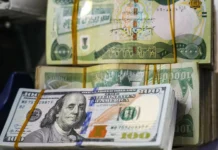
More than 17 billion Iraqi dinars ($11.18 million) in collected revenues and funds held in electronic accounts have reportedly gone missing from a state-owned bank, a source familiar with the matter told Shafaq News on Saturday.
The Federal Commission of Integrity (CoI) and the Federal Board of Supreme Audit should investigate the missing funds, review financial records and related electronic accounts, and examine collection and transfer procedures, according to the source, who said the inquiry should identify any administrative or financial failures, determine who was responsible, and take legal action against anyone found to be involved or negligent, while strengthening oversight to prevent similar incidents.
The bank’s identity, the timing of the disappearance, and whether an official investigation has begun remain unclear. Read more: Iraq’s Dawn Crackdown moves from raids to rulings
IMF Pledges “Firm” Support For Iraq
2026-10-17 Shafaq News- Bangkok The International Monetary Fund (IMF) intends to support Iraq “very firmly,” Managing Director Kristalina Georgieva said on Saturday.
“We will get to Iraq both money and policy support,” Georgieva said at a closing news conference during the IMF and World Bank annual meetings in Bangkok, citing significant progress toward the program. “We still have a bit more work to do together, and I’m confident we will be successful,” she added.
LIVE NOW: IMF Managing Director Kristalina Georgieva and IMFC Chair, Saudi Finance Minister Mohammed Al-Jadaan, will brief the press on the outcomes of the International Monetary and Financial Committee meeting.
The IMF and World Bank Group held their annual meetings in Thailand from October 12 to 18, bringing together finance ministers, central bank governors, and other officials to discuss global economic issues.
Among the attendees was Iraqi Finance Minister Faleh al-Sari, who outlined Iraq’s Vision 2050, which aims to reduce reliance on oil, strengthen the private sector, and promote inclusive, sustainable growth through stronger institutions.
Al-Sari also expressed confidence that Iraq could complete its financial reforms within the next two years, underscoring the importance of cooperation with the Fund in supporting those efforts.
In its October 13 World Economic Outlook, the IMF projected that Iraq’s economy would contract by 16% in 2026 before growing by 19% in 2027. The Fund also forecast a current account deficit of 10.8% of gross domestic product this year.
Iraq has been seeking to diversify its economy and increase non-oil revenues, as oil accounts for around 85% of government revenue. According to IMF data, the Fund last approved a $5.34 billion Stand-By Arrangement for Iraq in July 2016, of which the country drew approximately $2.1 billion.
Read more: The rentier trap: Iraq’s existential reform race
ECO Iraq: Iraqi Crude Production Reaches 830M+ Barrels
2026-10-17 Shafaq News- Baghdad Iraq produced approximately 834.7 million barrels of crude oil during the first nine months of 2026, with average daily production reaching its highest level in September at 4.399 million barrels, ECO Iraq Observatory said on Saturday.
According to the observatory, production averaged 4.097 million barrels per day in January and 4.140 million in February before falling sharply amid the regional war to 1.906 million in March and 1.633 million in April. Output reached its lowest level in May at 1.406 million barrels per day before recovering to 1.525 million in June, 2.901 million in July, and 3.746 million in August.
Read more: No exit but Hormuz: Iraq’s economic vulnerability exposed
Iraq Imports 95% Of Market Needs, PM Adviser Says
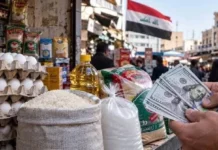
2026-10-17 Shafaq News- Baghdad aIraq relies on imports for about 95% of its market needs, excluding grains supplied through the food ration system, Prime Minister’s financial adviser Mudher Saleh said on Saturday.
Speaking at a trade, economy, and social responsibility forum in Baghdad, Saleh estimated annual private-sector imports of goods and services at $50 billion, rising to $70 billion when government imports are included. He warned against continued dependence on oil revenues to finance imports, particularly consumer goods.
He also called for closer links between trade, agriculture, and handicraft industries to create jobs and proposed establishing a dedicated body to support small and medium-sized producers and integrate local products into food supply chains, cooperatives, and markets through commercial contracts.
Deputy Trade Minister Sattar Al-Jabri told Shafaq News that “the ministry’s responsibilities extended beyond securing food supplies to easing financial pressure on households, regulating commercial activity, and maintaining stable markets and fair prices.”
Ibtihal Hashem Al-Rubaie, director-general of the ministry’s Administrative and Financial Department, called for greater support for productive businesses, training opportunities for young people and women, and a transparent, stable investment environment.
She argued that companies should be judged not only by profits but also by their contributions to employment, education, environmental protection, and good governance. Social responsibility, she added, should become a lasting institutional practice rather than a collection of isolated initiatives, with public and private institutions working together to direct resources toward sectors most in need.
Read more: Classroom to street corner: Degree holders stranded in Iraq’s job drought
Iraqis Buy 166 Homes In Turkiye In September
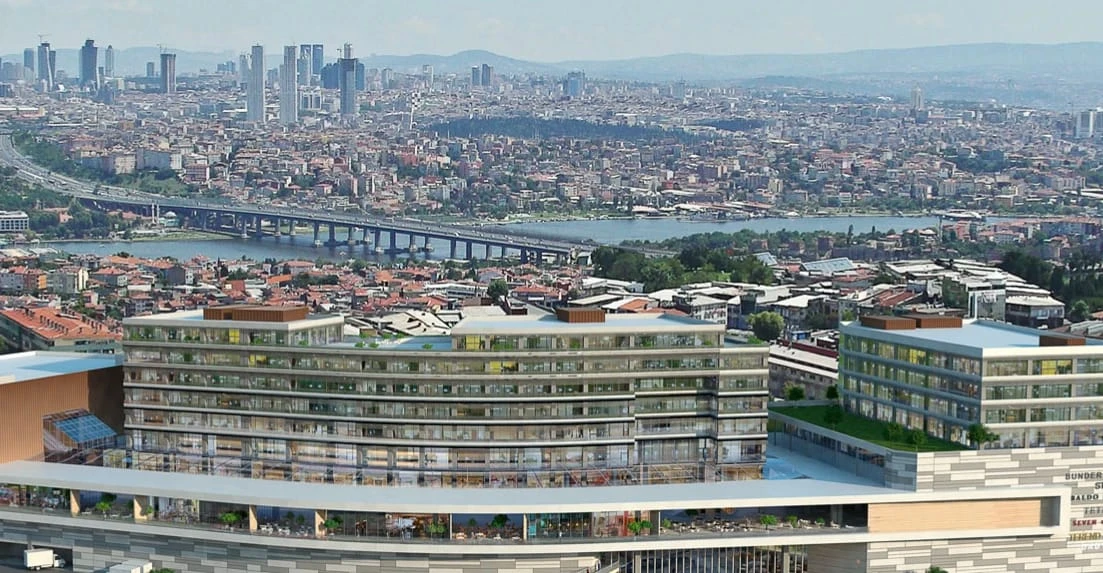
2026-10-17 Shafaq News- Ankara Iraqis ranked second among foreign homebuyers in Turkiye in September 2026, purchasing 166 homes and eight commercial properties, the Turkish Statistical Institute (TURKSTAT) said on Saturday.
Figures showed that Russian nationals topped the list with 388 homes, while Germans ranked third with 162. Iranian nationals purchased 159 homes, followed by Ukrainians with 158 and Chinese buyers with 124.
Home sales to foreigners in Turkiye rose 9.9% year on year in September to 2,167 units, accounting for 1.5% of total home sales nationwide.
Between January and August 2026, Iraqi citizens purchased 831 properties in Turkiye, including 801 homes and 30 commercial properties, according to TURKSTAT.