Kurdistan Finance Ministry Deposits Over 50 Billion Dinars Of April Revenues With Baghdad
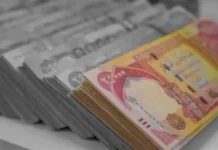
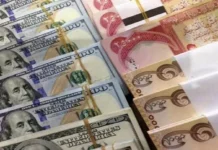
Money and Business Economy News – Baghdad The Ministry of Finance and Economy in the Kurdistan Region announced on Sunday that more than 50 billion dinars of non-oil revenues for the month of April have been deposited into the bank account of the Federal Ministry of Finance.
The ministry said in a statement seen by “Al-Eqtisad News” that it had deposited an amount of 50 billion, 292 million, and 213 thousand Iraqi dinars into the federal finance account at the Central Bank of Iraq branch in Erbil, as part of the financial procedures followed to settle non-oil revenues between the region and the federal government to finance the monthly salaries of Kurdistan employees. https://www.economy-news.net/content.php?id=68884
Iraq Maintains Its Position In The Global Gold Reserve Ranking During 2026
Money and Business Economy News – Baghdad Data from the World Gold Council revealed that gold constituted about 25% of Iraq’s total foreign reserves during 2026, reflecting the continued role of gold as one of the most important financial hedging tools in the country.
The latest official global gold reserves data for May 2026 showed that Iraq has not recorded any gold purchases since the beginning of 2026, remaining at 174.6 tons.
This figure comes amid a state of relative stability in the global gold market, where central banks continue to rely on gold as a safe asset alongside foreign currencies.
According to data seen by Shafaq News Agency, Iraq maintained its position in the global ranking, coming in at 28th globally and third in the Arab world during the past months of this year.
Globally, the United States topped the list with a reserve of 8,133 tons, followed by Germany with 3,350 tons, then Italy with 2,451 tons, France came in fourth with 2,437 tons, while China came in fifth with a reserve of 2,311 tons.
According to the report, Iraq purchased several quantities of gold during 2025, including one ton in March, 1.6 tons in June, 3.1 tons in July, 2.5 tons in August, and 3.8 tons in October.
It is worth noting that the World Gold Council, based in the United Kingdom, is one of the leading bodies specializing in analyzing global gold market trends and the factors affecting its prices. https://www.economy-news.net/content.php?id=68901
The Repercussions Of The Hormuz Closure: Iraq’s Economy Under Pressure: Rising Debt And Eroding Liquidity Threaten Financial Stability.
Reports Economy News – Baghdad The issue of financial stability in Iraq has returned to the forefront once again, with growing fears of a widening fiscal deficit and declining oil revenues, coinciding with rising domestic debt and a decrease in the central bank’s foreign reserves, at a time when the government affirms that the monetary situation is still under control and that reserves are capable of protecting the economy from external shocks.
The Ministry of Finance revealed that the total Iraqi domestic debt reached 96 trillion and 629 billion dinars by the end of April 2026, compared to an external debt of $13.039 billion, at a time when data indicates the state’s continued reliance on domestic borrowing to cover operational expenses, particularly salaries, government subsidies, and the energy sector.
According to data from the Public Debt Department, Iraqi governments have borrowed more than 46 trillion dinars domestically since 2023 until last April, of which only about 43% has been repaid, while the largest part of the debt still represents accumulated obligations from previous governments.
Nevertheless, financial authorities maintain that the debt-to-GDP ratio remains within internationally acceptable limits.
In contrast, clear signs of pressure on liquidity and cash reserves emerged, after recording a decline of more than 3 trillion dinars in the central bank’s reserves in just two weeks, according to official data pointed out by economist Nabil Al-Marsoumi, who warned that the gap between oil revenues and government spending has begun to widen in an unprecedented way.
Al-Marsoumi believes that the current crisis is directly related to the repercussions of regional tensions and the disruption of trade and energy in the region, especially after the closure of the Strait of Hormuz and the significant decline in Iraqi oil exports, which led to a decrease in oil revenues to levels that are insufficient to cover salaries and basic operating expenses.
According to his estimates, Iraq needs approximately 7 trillion dinars per month to cover operational spending, while current oil revenues provide only a limited portion of this amount, which puts the government in front of difficult financial choices, most notably expanding domestic borrowing or resorting to monetary tools that may later affect monetary stability and the level of inflation.
Experts also warn that the continued decline in oil revenues will lead to a further depletion of foreign reserves, especially as the central bank continues to finance foreign trade and maintain exchange rate stability, given the limited non-oil revenues and declining commercial activity as a result of regional turmoil.
In contrast, the Prime Minister’s financial and economic advisor, Mazhar Muhammad Salih, downplays the seriousness of the situation, stressing that foreign reserves still represent the first line of defense for the Iraqi economy, and that monetary management has the technical ability to absorb temporary shocks.
In his interview with “Al-Eqtisad News,” Saleh points out that foreign reserves still cover about 12 months of imports, a percentage that far exceeds safe international standards.
He stressed that any short-term fluctuation in reserves can be dealt with within the approved monetary policies, and that the central bank still retains effective tools to ensure financial and monetary stability.
Despite official assurances, observers believe the real challenge lies not only in the size of reserves or public debt, but also in the Iraqi economy’s continued near-total dependence on oil, at a time when regional energy markets and supply lines are experiencing frequent shocks. Furthermore, delays in gas and energy projects and rising operational spending are placing public finances under pressure that could worsen if the regional crisis persists.
Between the government’s vision, which emphasizes the strength of the monetary situation, and experts’ warnings of a widening deficit and liquidity gap, the Iraqi economy remains facing a difficult test that depends largely on the stability of oil markets and the state’s ability to diversify its resources and reduce its dependence on rentier spending in the face of rapidly changing regional circumstances. https://www.economy-news.net/content.php?id=68902
The Iraqi Stock Market Traded 48 Billion Shares Worth 27 Billion Dinars During The Month.
Stock Exchange Economy News – Baghdad The Iraq Stock Exchange announced on Sunday that more than 48 billion shares worth more than 27 billion dinars were traded during the month of April.
A market report stated that “the market held 20 regular trading sessions during the month, during which shares of 82 out of 118 listed companies were traded.”
He added that “the number of executed transactions reached about 23,490 transactions, while the number of shares traded exceeded 48 billion and 605 million shares, with a value of 27 billion and 457 million dinars, distributed across various sectors.”
The report noted that “the ISX60 index closed at the end of the month at 983.02 points, recording an increase of 1.9% compared to the previous session’s close,” indicating that this “reflects a state of anticipation and caution among investors during trading periods.”
The Iraq Stock Exchange, which includes diverse sectors such as banking, telecommunications, industry, insurance, investment and services, is witnessing regular trading activity despite the economic challenges. https://www.economy-news.net/content.php?id=68906
Aramco CEO: The World Lost One Billion Barrels Of Oil In Two Months
energy Economy News – Follow-up Commenting On The Company’s Results Released On Sunday, Saudi Aramco President And CEO Amin Nasser Said The Past Two Months Have Served As A Stark Reminder That Oil And Gas Remain Essential Components Of Global Energy Security.
He Added That The World Has Lost About One Billion Barrels Of Oil In The Past Two Months, Noting That Even With The Resumption Of Energy Flows, It Will Take Time For The System To Return To Normal.
Al-Nasser Explained That Aramco’s Goal Is To Ensure The Continued Flow Of Energy, Stressing That The Company Was Able To Restart Some Of The Affected Facilities In Less Than 24 To 48 Hours, A Process That Could Have Taken Months Without Prior Investment And Emergency Planning.
Al-Nasser Noted That Years Of Underinvestment, Coupled With Recent Supply Disruptions, Have Increased Pressure On Global Stockpiles.
Al-Nasser Also Emphasized That Asia Remains A Top Priority For Saudi Aramco.
Al-Nasser Noted That The Company’s Performance In The First Quarter Reflects Strong Operational Resilience And A Great Ability To Adapt In A Complex Geopolitical Environment.
He Added That The East-West Pipeline, Which Is Now Operating At Its Maximum Capacity Of 7 Million Barrels Of Oil Per Day, Has Proven To Be A Vital Artery To Ensure The Continued Supply Of Oil And Other Products To The Markets, As It Has Helped To Mitigate The Effects Of The Global Energy Shock And Has Contributed To Providing Support To Customers Affected By Shipping Restrictions In The Strait Of Hormuz. https://www.economy-news.net/content.php?id=68887