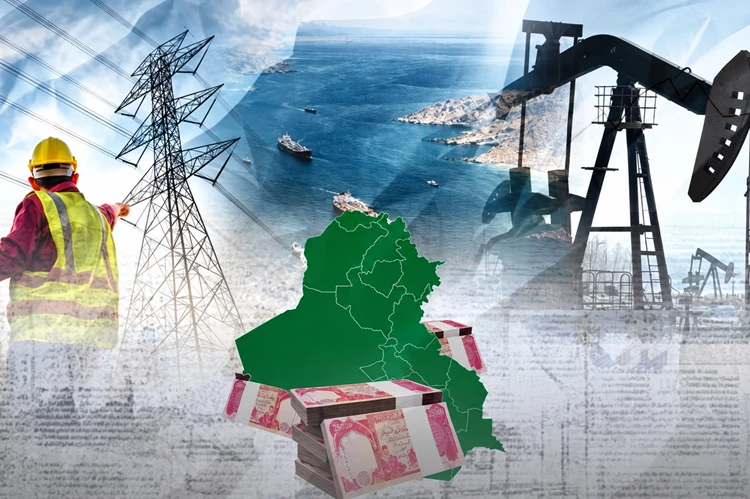
Iraq is getting ready to prepare its 2027 budget and send it to Parliament in October for discussion, changes, and approval. But there are growing concerns that the government may be following the same approach used in previous years, even as the country faces economic pressure and uncertainty caused by regional tensions.
Some politicians believe Iraq needs a different kind of budget this time. They argue that the country cannot continue relying heavily on oil revenues while ignoring the need for stronger and more stable sources of income.
Former member of the Parliamentary Finance Committee, Muhammad Ibrahim, said the government appears to be repeating old policies by focusing on contract and temporary workers without first making sure there is enough funding to guarantee salaries for permanent employees. According to him, this shows confusion in the way the budget is being prepared.
He said turning contract workers into permanent employees should not be seen as a major achievement if the government does not also work on strengthening the economy. He believes Iraq should focus on creating new sources of revenue, activating the sovereign wealth fund, supporting industry, and developing productive sectors that can help reduce dependence on oil.
Ibrahim also stressed that repeating the same budget plans from previous governments will not solve Iraq’s financial challenges. He said the budget needs a serious review to strengthen state revenues and ensure employees receive their rights in the years ahead.
Meanwhile, MP Farouk Al-Yassiri said Parliament’s leadership has confirmed that contract workers will be included in the 2027 budget. He added that discussions are still ongoing about including daily wage workers as well, with efforts continuing to find a fair solution for them.
Al-Yassiri said there is also work being done to protect the rights of contract workers and secure job positions for them in next year’s budget. He called on the Health Minister to pay close attention to graduates from medical, health, and nursing fields and to find suitable solutions for their employment.
He explained that efforts are also continuing to include these graduates and their job allocations in the 2027 budget. However, final decisions will depend on economic conditions, available funding, and developments in the region.
According to Al-Yassiri, Iraq’s financial situation remains closely connected to what happens around the Strait of Hormuz. Any disruption in the area could affect oil exports and government revenues, making budget planning more difficult.
Economist Dr. Safwan Qusay said preparations for the 2027 budget are already underway with the goal of creating a clear plan for government spending and funding sources.
He explained that several possible scenarios are being considered for next year’s budget. Everyone hopes tensions in the region, especially those related to the Strait of Hormuz, will ease before October because Iraq still depends on oil exports from its southern ports for about 90 percent of its income.
Qusay added that if tensions continue and the situation remains unresolved, Iraq may have to rely on spending rules already set by existing laws. He also said government institutions will need to increase their own revenues and become less dependent on funding from the Ministry of Finance.
The discussion around the 2027 budget highlights a bigger issue facing Iraq: the need to reduce dependence on oil, strengthen other sectors of the economy, and create a more stable financial future for the country.