Parliamentary Proposal To Establish A Fund To Finance The Appointment Of Healthcare Personnel
Money and Business Economy News — Baghdad
The Parliamentary Health Committee revealed the adoption of a proposal to establish a special fund to finance the appointment of health and medical professionals, relying on non-oil sources, with the aim of addressing the shortage of staff and improving the level of medical services.
Committee member Ghaith Shabaa said in a press statement that the most prominent sources of funding for the fund include imposing health insurance on those coming to Iraq, and obligating investment projects and major contracting projects to provide health personnel to supervise their workers, provided that the percentages of these personnel are determined within the controls of the Investment Authority and the relevant authorities.
He added that one of the proposals is to address the shortage of health units within private schools, by imposing specific ratios of medical staff according to the number of students, with the experiment later being generalized to private universities, to ensure the provision of health care within educational institutions.
He added that the proposal also includes increasing taxes on products harmful to health such as cigarettes and alcoholic beverages, which will contribute to reducing consumption and providing additional revenues, noting that the study has been completed and submitted to the relevant authorities pending its legislation and implementation.
Oil Dips On Signs Of US-Iran Dialogue Despite Hormuz Tensions
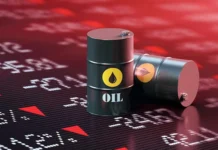
2026-04-14 Shafaq News Oil prices fell in early Asian trade on Tuesday as signs of potential U.S.-Iran dialogue to end their war reduced concerns about supply risks stemming from the U.S. blockade of the Strait of Hormuz.
Brent futures declined by $1.86, or 1.87%, to $97.50, while U.S. West Texas Intermediate (WTI) crude fell $2.25, or 2.27%, to $96.83 by 0003 GMT.
Both benchmarks had risen in the previous session, with Brent climbing more than 4% and WTI nearly 3%, after the U.S. military began a blockade of Iran’s ports.
The U.S. military said on Monday that its blockade of the Strait of Hormuz would extend east to the Gulf of Oman and Arabian Sea, while ship-tracking data showed two ships turned around in the strait as the blockade went into effect.
Iran, in response, threatened to target ports in Gulf-bordering nations following the collapse of weekend talks in Islamabad aimed at resolving the crisis.
“Despite the breakdown of peace talks in Pakistan over the weekend, Trump has managed to take some steam out of the oil price again dangling carrot of a possible deal,” said TimWaterer, chief market analyst at KCM Trade.
Sources familiar with the negotiations said dialogue between Iran and the U.S. was still alive, while Pakistani Prime Minister Shehbaz Sharif affirmed ongoing efforts to de-escalate tensions. Trump said on Monday that Iran “wants to make a deal”.
ANZ analysts estimate that about 10 million barrels per day of crude supply have been effectively removed from the market, adding that a prolonged U.S. blockade could curb an additional 3 million to 4 million bpd of crude shipments.
“The oil market no longer needs a worst-case escalation to justify higher pricing levels. Tight balances alone are sufficient to sustain the price of Brent near or above recent threshold levels,” ANZ said in a client note.
NATO allies, including Britain and France, refrained from joining the blockade, advocating instead for reopening the vital waterway.
U.S. Energy Secretary Chris Wright suggested oil prices could peak in “the next few weeks” once shipping resumes through the Strait of Hormuz.
The International Monetary Fund, the World Bank, and the International Energy Agency urged countries to avoid hoarding energy supplies or imposing export curbs amid what they described as the most significant shock ever to the global energy market.
IEA chief Fatih Birol said onMonday that while further strategic oil releases might not yet be necessary, the agency remains prepared to act if needed.
Meanwhile, the Organization of the Petroleum Exporting Countries scaled back its second-quarter global demand forecast by 500,000 bpd in its latest monthly report. (REUTERS)
Basrah Crudes Rise Despite Global Losses
2026-04-14 Shafaq News- Basrah Iraq’s Basrah crude climbed more than 2% on Tuesday, amid a decline in global oil markets. Basrah Heavy crude rose by $2.48, or 2.16%, to $117.45 per barrel, while Basrah Medium crude gained by $2.48, or 2.12%, to settle at $119.55 per barrel.
Brent futures slipped 76 cents, or 0.8%, to $98.57 by 0601 GMT, while US West Texas Intermediate (WTI) crude fell $1.63, or 1.65%, to stand at $97.45.https://www.shafaq.com/en/Economy/Basrah-crudes-rise-despite-global-losses
Dollar slips in Baghdad and Erbil
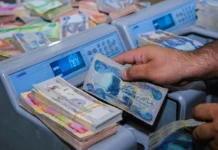
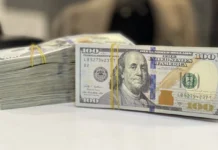
2026-04-14 Shafaq News- Baghdad/ Erbil The US dollar opened Tuesday’s trading lower in Iraq, hovering around 154,000 dinars per 100 dollars. According to a Shafaq News market survey, the dollar traded in Baghdad’s Al-Kifah and Al-Harithiya exchanges at 153,700 dinars per 100 dollars, down from the previous session’s 154,150 dinars.
In the Iraqi capital, exchange shops sold the dollar at 154,250 dinars and bought it at 153,250 dinars, while in Erbil, selling prices stood at 154,000 dinars and buying prices at 153,900 dinars.
Gold Prices Rise In Baghdad And Erbil Markets
2026-04- Shafaq News- Baghdad/ Erbil On Tuesday, gold prices hovered around 1.03 million IQD per mithqal in Baghdad and Erbil markets, according to a survey by Shafaq News Agency.
Gold prices on Baghdad’s Al-Nahr Street recorded a selling price of 1,033,000 IQD per mithqal (equivalent to five grams) for 21-carat gold, including Gulf, Turkish, and European varieties, with a buying price of 1,029,000 IQD. The same gold had sold for 1,025,000 IQD on Monday.
The selling price for 21-carat Iraqi gold stood at 1,003,000 IQD, with a buying price of 999,000 IQD.
In jewelry stores, the selling price per mithqal of 21-carat Gulf gold ranged between 1,035,000 and 1,045,000 IQD, while Iraqi gold sold for between 1,005,000 and 1,015,000 IQD.
In Erbil, 22-carat gold was sold at 1,090,000 IQD per mithqal, 21-carat gold at 1,040,000 IQD, and 18-carat gold at 890,000 IQD.https://www.shafaq.com/en/Economy/Gold-prices-rise-in-Baghdad-and-Erbil-markets-9-1
Iraq, Syria Plan “Financial Sector Day” To Bolster Cooperation
2026-04-14 Shafaq News- Washington Damascus is moving to deepen financial cooperation with Baghdad, including plans for a joint banking event, Syrian Central Bank Governor Abdul Qader al-Hasriya revealed on Tuesday.
In remarks to Shafaq News, al-Hasriya confirmed direct coordination between the Central Bank of Syria and the Central Bank of Iraq to organize a “Syrian-Iraqi Financial Sector Day,” to be held under the joint sponsorship of both institutions.
Syrian officials, he added, are also considering an official visit to Baghdad to further develop ties.
Beyond finance, Iraq and Syria have maintained cooperation across academia, private-sector partnerships, and official discussions on energy and water management. Iraq has recently begun overland fuel oil exports to Syria, a step the Iraqi Oil Ministry said will support the national economy and boost state revenues.
For Shafaq News, Mostafa Hashem, Washington, DC.
ICSC Produces +600K Tons In February, With Key Plants Posting Double-Digit Growth
2026-04-14 Shafaq News- Baghdad The Iraqi Cement State Company (ICSC), affiliated with the Ministry of Industry and Minerals, announced Tuesday a strong production and marketing performance in February, driven by sustained and stable operations across its facilities.
Director General Awad Kazem Abd al-Amir said the company’s plants produced more than 676,000 tons of cement across various grades during the month, while marketed quantities reached more than 664,000 tons, meeting local market demand and reinforcing the presence of Iraqi-produced cement.
Abd al-Amir noted that several plants recorded notable growth compared to 2025, with the Kubaisa cement plant leading at 37%, followed by the Qaim plant at 17% and the Sinjar plant at 14%. The Kubaisa plant, which produced more than 1.7 million tonnes in 2025 and is approaching its planned annual capacity of 1.8 million tonnes, was among the company’s strongest performers.
The February results reflect the efforts of plant administrations and technical, engineering, and administrative staff, Abd al-Amir said, adding that the company is continuing to develop plant performance and expand production capacity in support of the national industry’s role in achieving self-sufficiency.
The figures come against the backdrop of a domestic cement market estimated at around 25 million tonnes per year, driven by housing projects, oil-field infrastructure, and ongoing reconstruction needs across the country.