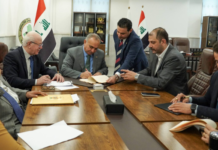
Concerns are growing across Iraq as more people question the government’s increasing reliance on American companies. Many Iraqis believe that after years of operating in the country, these companies have not done enough to solve major problems or improve key sectors. Because of this, there is growing criticism of giving American firms such a large role instead of working with companies from different countries.
Political analyst Haider al-Moussawi said many Iraqis have little confidence in American companies because of their history in Iraq. According to him, the decision by Prime Minister Ali al-Zaidi to once again rely on American firms has raised questions among the public. Many people are asking why the government is not looking at other countries to help expand investment opportunities and support economic growth.
Al-Moussawi warned that if Iraq continues to connect major sectors and agreements mainly to American companies, the country’s economy could become too dependent on the United States. He said previous experiences have left many Iraqis doubtful that these companies can deliver the results the country needs.
Hussein al-Karawi, head of the organizing committee for the Belt and Road Initiative, also criticized the government’s approach. He argued that bringing more American companies into Iraq serves Washington’s interests and helps strengthen the U.S. economy. In his view, American companies have not provided meaningful benefits to Iraq over the past two decades.
Al-Karawi further claimed that the United States has worked to limit opportunities for other international companies in Iraq. He pointed to restrictions on Chinese companies and obstacles faced by other foreign firms. He also said that agreements signed between Iraq and China during the government of former Prime Minister Adel Abdul-Mahdi were eventually canceled.
Former MP Arif al-Hamami said Iraq is facing strong pressure from the United States in several areas, especially in the oil sector. He believes this pressure could push the government toward more contracts with American energy companies.
Al-Hamami also questioned Washington’s record of fulfilling agreements with Iraq. He said past experiences, including military contracts, have left concerns about whether commitments were fully honored. According to him, there are fears that Iraq could spend large amounts of money on agreements that fail to deliver the promised results.
As debates continue, the issue remains highly controversial. Supporters of diversification argue that Iraq should work with a wider range of international partners, while critics of current policies worry that relying too heavily on one country could increase economic dependence and limit Iraq’s future options. Iraqi funds